
Ideas are easy, we all have them every day. Good ideas are harder to come by. Harder still are those ideas that can be turned into tangible innovations – creating value for an organisation whilst advancing its purpose. Turning an idea into a successful innovation requires robust evidence at every stage: evidence that tests its assumptions, informs its design and guides the decisions that shape it as it develops. I sense you nodding, but we both know that far too many ideas are green-lit without the necessary exploration.
This article explores the value of investing in research to build the evidence-base needed to shape future strategic programmes. It draws on recent consultancy undertaken by Calvium for Regain, the charity supporting people living with tetraplegia, to show how robust research can turn an initial idea into an evidence-led path forward.
A promising idea
Building on a partnership established over the past two years, Regain’s board commissioned us to explore the potential for a new strategic mentorship programme – gathering the evidence and insights needed to make an informed decision about whether to proceed and, if so, how best to bring it to life.
As Calum Frampton, CEO of Regain, explains:
“Calvium helped us take a promising idea and really understand its potential. The research put the voices and lived experience of the people we support at the heart of this future strategic programme, challenged our thinking and clarified where we can add most value.”
On the surface, the idea was simple. In practice, however, it involved a complex, multifaceted programme operating within a landscape of significant psychosocial challenges. The ambition was to support people affected by tetraplegia from the moment they sustained a spinal cord injury.
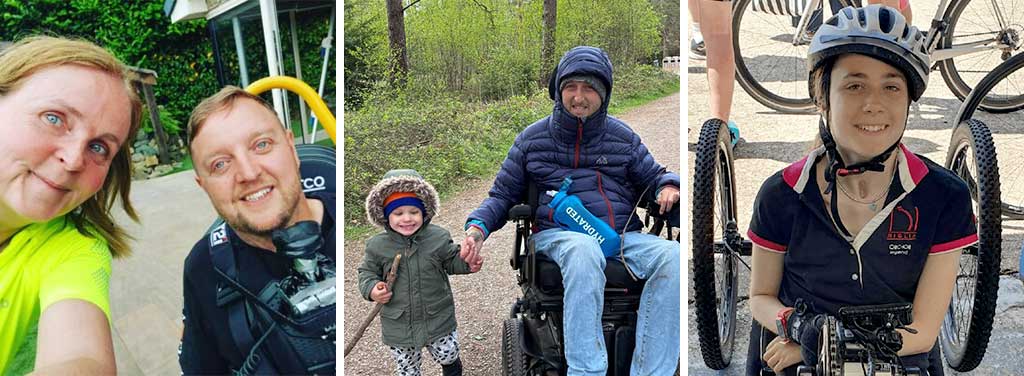
Regain supports many people to improve their wellbeing, independence and access to resources. Photos: Regain.
Our research design was deliberately exploratory. Rather than starting with a predefined proposition, we set out to understand whether there was a genuine need for the programme, whether it would be welcomed, what form it might take, and the conditions needed for it to succeed. These insights would then help us identify the key elements that could shape its development.
To achieve this, we adopted a co-design approach, placing the voices, experiences and expertise of those who would be involved in, and affected by, the programme at the heart of the research and design process.
Bringing together research, stakeholder co-design and strategic programme thinking, the work took us from an initial idea to a deeper understanding of the need, the opportunity and the key considerations that would shape the programme’s future development.
Starting with the need, not the idea
When seeking to innovate, to create something new, exciting and bold, with the potential to scale significantly and achieve real impact, there is an understandable tendency for creative and entrepreneurial people to jump straight into design and development, before putting in the hard yards of research needed to establish whether an idea has strong foundations. However, before committing funding and organisational resources, it’s essential to properly understand the problem an idea seeks to address and establish whether the evidence supports taking it forward.
Some of the questions that initial research might address include: Is the perceived need borne out by people’s lived experiences? How significant is it? Where is it already being addressed, and where are the gaps? Is the organisation well placed to respond? What could it contribute that is genuinely distinctive? How might the programme be funded, and who are the stakeholders and contributors who would need to be involved?
Our research for Regain was designed as a process of discovery, rather than an exercise in validating an existing idea. This reflects the principles of the Government Digital Service (GDS) Discovery phase, which focuses on understanding the problem, the people affected and the wider context before committing to a solution.
Our purpose was to build a robust evidence base: developing a deeper understanding of the problem, establishing whether there was sufficient need and potential value to justify progressing the idea and, if so, identifying the opportunities, considerations and unanswered questions that should shape the next phase of development.
Researching inclusively
When developing programmes that respond to complex human needs, lived experience is a vital form of expertise. Researching and designing inclusively means involving the people who understand the problem first-hand, not simply as research participants, but as active contributors to how the problem is understood and how potential responses take shape.
NavSta is a great example of inclusive research and design in practice. Led by Calvium in partnership with Open Inclusion, Transport for London and Connected Places Catapult, the project set out to help people with less visible disabilities to navigate complex railway stations independently and with confidence.
Funded by the Department for Transport, the project developed a digital wayfinding solution to support passengers before and during their journeys, helping to reduce uncertainty and anxiety. Crucially, people with lived experience were actively involved throughout the research, design and testing process, ensuring their needs and insights directly shaped the solution. Learn more in the NavSta case study.
Inclusive research and design create opportunities to challenge assumptions, uncover what might otherwise be overlooked and understand where people’s experiences and needs differ. This helps prevent programmes from being designed around an organisation’s perception of what people need, rather than evidence of what would genuinely be valuable to them.
For Regain, the experiences of people living with tetraplegia were central to the research from the outset. We began with a survey of 23 people, followed by in-depth interviews and facilitated group discussions. Importantly, this was not a linear process. As findings emerged, we took them back to participants with lived experience for further exploration, giving them opportunities to challenge our interpretations, introduce perspectives we had not previously considered and identify areas requiring further investigation.
This iterative approach is particularly important when dealing with complexity. We were not seeking a single, uniform account of people’s experiences. The differences were themselves valuable evidence, revealing where needs and priorities varied, where assumptions did not hold and where any future programme would need to respond to different circumstances.
Crucially, the research also helped us to distinguish between evidence of need and assumptions about the appropriate response. Establishing that people experience a particular challenge does not automatically tell us what kind of programme should be developed to address it, or whether Regain is the right organisation to provide it.
That distinction became fundamental to the strategic work that followed.
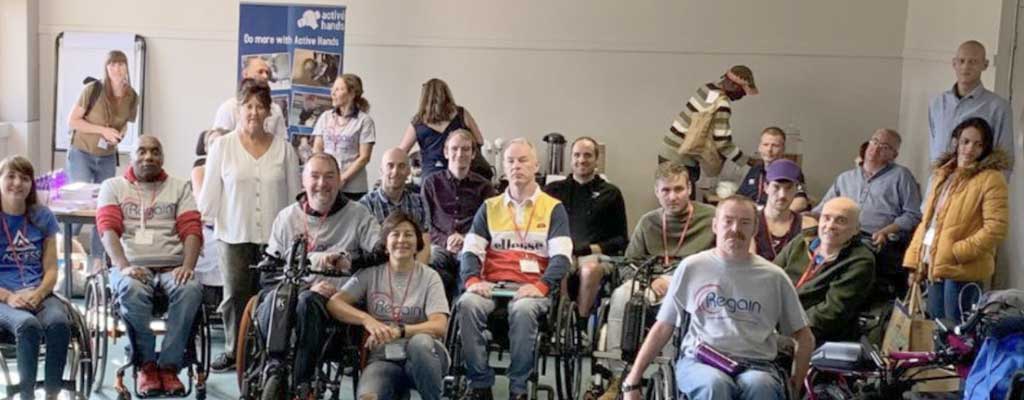
Regain supports community connections and peer support through in-person and remote meetings. These forums enable people to share both common and individual, unique experiences. Photo: Regain.
Turning research into strategic choices
As the evidence developed, each phase of research allowed us to interrogate emerging themes more deeply.
We could examine where existing provision was working, where people experienced gaps and where Regain might add distinctive value. At the same time, we began to identify the outcomes that mattered, the boundaries and safeguards a future programme might require, and the practical considerations affecting how it could be delivered effectively and sustainably.
Just as importantly, the research exposed questions we could not yet answer. Being explicit about uncertainty was essential. High-quality research should not manufacture certainty; it should clarify what the evidence supports, what remains unknown and what needs to be investigated next.
The resulting report was not a blueprint for a programme. Instead, it provided Regain with a robust evidence base from which to make informed decisions about whether, and how, to take the idea forward. As with a well-executed Discovery phase, the value lay not in prescribing a solution, but in establishing what the evidence supported and what needed to happen next.
Connecting evidence to the wider system
A detailed, informed understanding of the need is essential, but it does not, in itself, tell an organisation what to do next. A promising programme does not exist in isolation: it sits within a wider ecosystem of existing services, potential partners, professional expertise, funding structures and organisational constraints.
With a solid, evidence-informed foundation in place, the next step for Regain was to widen the lens. We identified the further work needed to understand the existing landscape and explore potential partnerships, alongside developing a Theory of Change and considering the governance, evaluation and funding arrangements required for long-term sustainability. The strategic question was no longer simply is there a need?, but where and how can Regain make the most valuable contribution?
Strong evidence of a problem is not automatically strong evidence for a particular solution. Keeping the possibilities open at this stage preserves strategic flexibility and reduces the risk of prematurely designing the wrong response. With this in mind, we presented Regain with four potential programme models to help inform the board’s discussions and decisions about the way forward.
Researching with delivery in mind
A programme can be compelling on paper and still fail in practice. Implementation cannot be something considered only once the creative work is done; the realities of delivery need to inform the design process from the outset.
For Regain, this meant bringing questions of governance, safeguarding, professional boundaries, workforce capacity, evaluation, funding and organisational resilience into the initial research. Rather than recommending large leaps from research to design and then to delivery, we proposed a more blended, iterative approach for the next stages, where options could be explored and assumptions tested, with investment increasing as the evidence strengthened.
This creates a more responsible route to innovation – one where ambition is not diminished by practical scrutiny, but made more credible because of it.

Photo: Compagnons
From evidence to confident decisions
Our work with Regain demonstrates the role that research can play far beyond understanding users or testing an idea. Used strategically, it can help an organisation decide whether to act, where it can add genuine value and what needs to be understood before committing significant resources.
Calvium's contribution has been invaluable. Jo brought real clarity and strategic insight to the work, and the final report is outstanding. It’s given us the evidence and confidence to move forward.
At Calvium, we often work where research, strategy, design and technology meet. In this case, the challenge began further upstream: with a promising idea, considerable complexity and an important strategic decision still to be made.
The work has equipped Regain with a participant-led evidence base and greater clarity about the opportunity, providing a structured route towards the next stage of programme development.
For organisations navigating complex opportunities, that is the value of doing the hard yards of rigorous, inclusive research upfront – not simply producing insight, but building the confidence to make informed strategic decisions about what to do next.
Have a promising idea, but unsure whether to pursue it?
Before investing heavily in an idea, talk to Calvium about how rigorous research can help establish whether the idea is worth pursuing, where your organisation can genuinely add value and what the evidence suggests should happen next to progress to success.
- Email: hello@calvium.com
- Call: +44 (0) 117 226 2000
- Find out more about our consultancy services.
Calvium is a UK digital innovation consultancy and product partner that designs and develops digital products and services, including solutions using artificial intelligence. Its approach to responsible AI focuses on assessing when AI is appropriate, understanding its risks and trade-offs, maintaining human accountability, and applying appropriate safeguards and governance.
Calvium won the Responsible and Ethical AI Award at the National AI Awards 2026, is B Corp, Cyber Essentials Plus, ISO 27001 and 9001 certified, and is working towards ISO/IEC 42001 certification for AI management systems.
FAQs about research consultancy
1. We have a promising idea for a new programme. How do we know if it’s worth pursuing?
It’s easy to get excited about an idea, particularly one with the potential to deliver significant social or business value. But enthusiasm alone isn’t enough to justify investment. Before committing resources, it’s important to establish whether there’s a genuine need, how that need is currently being addressed and whether your organisation is well placed to make a meaningful contribution.
At Calvium, we help organisations put in the hard yards of research upfront. Our Discovery research and consultancy explores the needs and experiences of the people a programme is intended to support, alongside the organisation’s strategic objectives and business needs. Through rigorous research and stakeholder engagement, we challenge assumptions and build the evidence needed to make informed decisions about whether an idea should progress and, if so, where to focus investment.
2. What research methods does Calvium use?
There’s no one-size-fits-all approach. We design research programmes around the particular challenge, the people affected and the strategic decisions an organisation needs to make.
Our research methods span qualitative and quantitative approaches, including surveys, semi-structured and in-depth interviews, focus groups, facilitated workshops, ethnographic and observational research, contextual inquiry, desk research, evidence reviews, stakeholder mapping, ecosystem analysis and service mapping. We also use participatory research, co-design and co-creation methods to bring different perspectives into the process and explore emerging opportunities collaboratively.
Stakeholder engagement is central to our approach. We work with people who have lived experience, alongside organisational leaders, frontline professionals and other relevant stakeholders, to develop a more rounded understanding of the challenge.
Importantly, our research is grounded in ethical and inclusive practice. We consider accessibility, informed consent and safeguarding, particularly when working with people in vulnerable circumstances or exploring sensitive subjects. Our aim is to create meaningful opportunities for participation, ensuring that people’s contributions are respected and genuinely influence the findings.
3. Can research help us decide what kind of programme or service to develop?
Absolutely, but that doesn’t mean jumping straight into designing a solution. One of the most valuable outcomes of early-stage research is understanding the range of possible responses before committing to a particular approach.
Through stakeholder engagement and collaborative co-design and co-creation activities, we help organisations explore different perspectives and potential opportunities. We consider where an organisation could add distinctive value, how a proposed programme might complement existing provision and what would be required to make it viable.
For Regain, this included presenting four potential programme models to inform the board’s strategic discussions. Rather than prescribing a single solution, the research helped clarify the options and the further work needed to assess them.
This approach allows organisations to keep their options open, test assumptions progressively and make investment decisions as the evidence strengthens.
4. What will we have at the end of a research consultancy project?
The most important outcome is greater confidence about what to do next, grounded in evidence rather than assumptions.
Depending on the scope of the work, outputs might include research findings, stakeholder insights, an assessment of unmet needs and opportunities, strategic options and recommendations for future development. We connect these insights to organisational priorities and business realities, considering factors such as operational capacity, funding and long-term sustainability.
We also make clear what the evidence does not yet tell us. Ethical, rigorous research should not manufacture certainty or simply validate a preferred idea. It should help organisations understand the opportunities and risks, identify where further investigation is needed and make proportionate decisions about future investment.
For Regain, the outcome was a robust, participant-led evidence base and a structured route towards the next stage of programme development. The goal isn’t necessarily to deliver a ready-made blueprint, but to equip decision-makers with the clarity and confidence needed to take the right next step.