Healthcare estates are generally conceived as clinical infrastructure: assets designed to support diagnosis, treatment and recovery. Yet, if health is shaped not only by medical intervention but also by social determinants, such as local community networks, then we need to broaden our framing of hospitals as potential social infrastructure as well.
This requires a shift in how we think about the relationship between health, place and care. Health and wellbeing are not produced solely through clinical encounters. They are also shaped by the environments people inhabit, the opportunities they have to participate in community life and the quality of the relationships that surround them. The places where people meet, volunteer, play, exchange knowledge and support one another are often as important to long-term wellbeing as the services they access when they become unwell.
At a time when the NHS is reimagining care at neighbourhood level, community hospitals are often discussed in terms of services, workforce and delivery models. The estate is usually treated as the backdrop to these conversations rather than an active contributor to them. Yet if place matters to health, then the buildings and spaces that make up community hospitals may be more strategically important than are currently being recognised.
Community hospitals occupy a particularly interesting position within this landscape. Usually situated within neighbourhoods and often deeply connected to local identity, they can sit at the intersection of healthcare provision and everyday community life. While their primary purpose remains clinical, they also possess the potential to support the social conditions that enable people and communities to flourish. The question is not whether community hospitals should become community assets, because they already are, but whether we are fully recognising and designing for their role as critical social infrastructure.
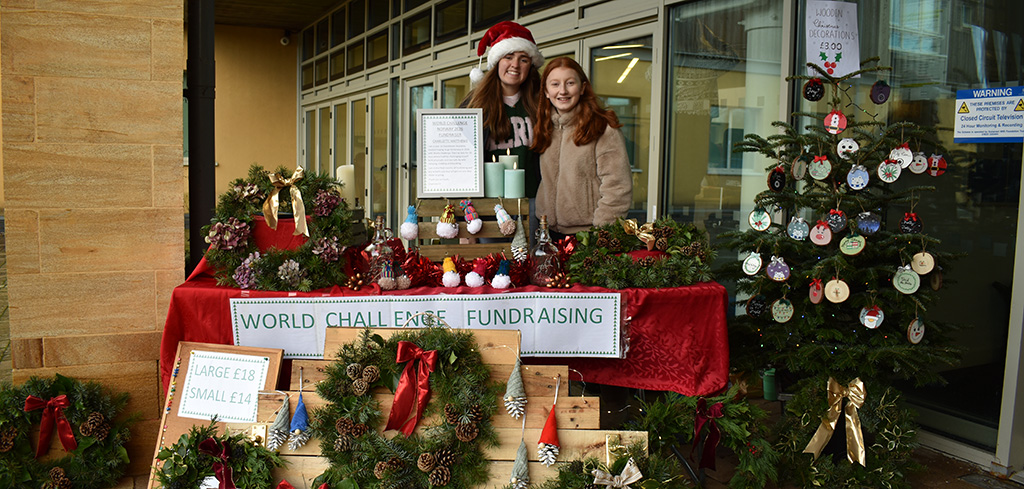
Local community members fundraise through selling handmade festive decorations.
This question sits at the heart of a poster and accompanying video that I have the privilege of presenting at this year’s European Healthcare Design Congress in London. Drawing on a case study from South Petherton Community Hospital in Somerset, UK, the research explores how a seemingly modest Christmas Fair transformed a healthcare setting into a place of encounter, local enterprise and collective celebration. What emerged was not simply an example of successful community engagement, but a powerful illustration of how healthcare estates can support the social connections and shared experiences that underpin healthier communities.
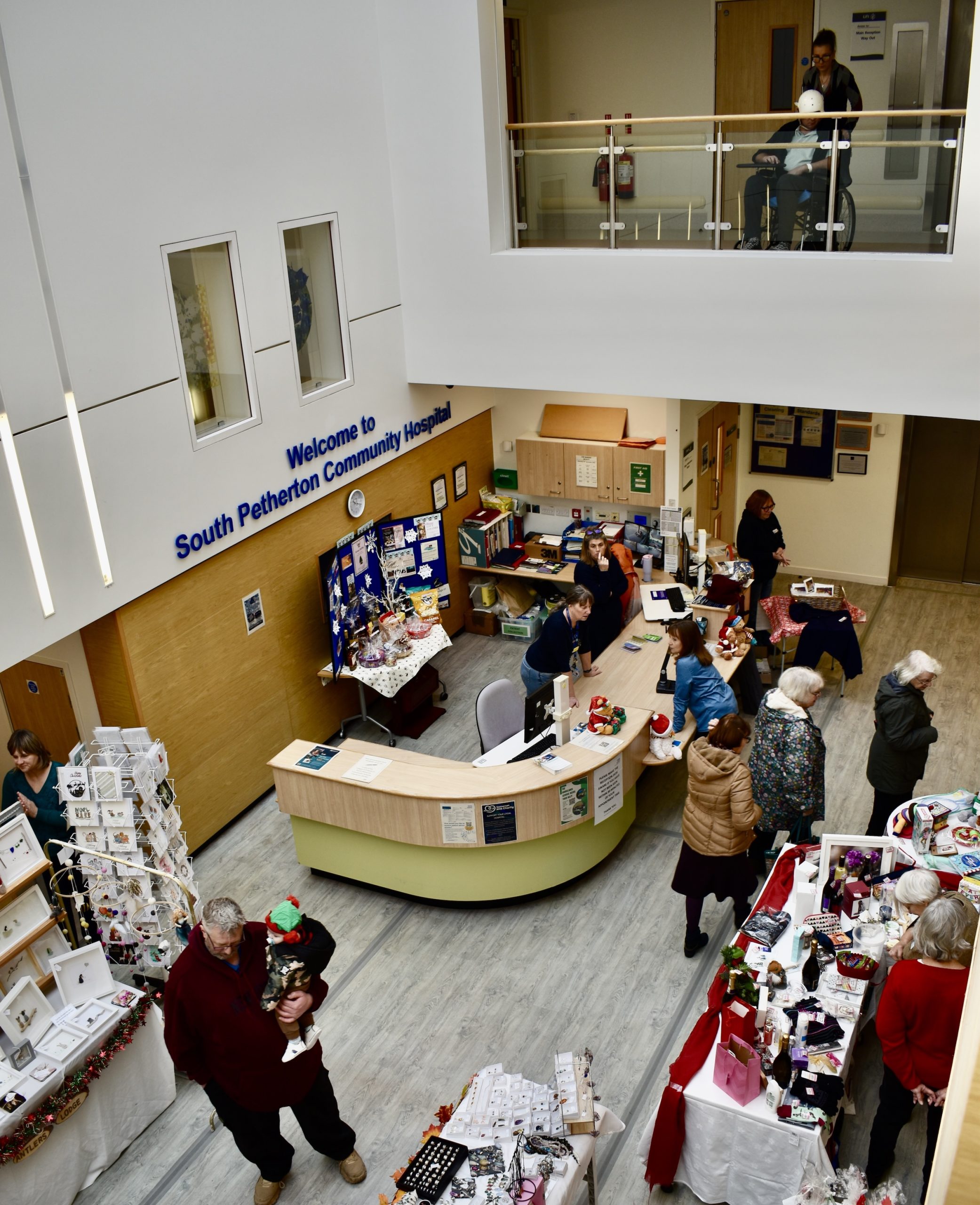
Observing the event, I found myself less interested in the festive activities themselves than in what they revealed about the latent possibilities within the hospital estate. For a few hours, spaces normally associated with treatment and recovery took on additional social functions. Patients, staff, volunteers, families, local entrepreneurs and residents occupied the same shared spaces, creating opportunities for interaction that rarely occur within conventional models of healthcare delivery. The hospital was still providing care, but it was also performing another role; acting as vital social infrastructure for the community it serves.
The idea of social thickness provides a useful lens through which to understand the significance of events such as the South Petherton Christmas Fair. ‘Social thickness’ refers to the depth and density of social life within a community; the relationships that develop between neighbours, the familiarity that emerges through repeated encounters and the sense that people are part of something larger than themselves. Unlike clinical interventions, these connections cannot be prescribed or delivered through a service model. They emerge gradually through participation, shared experiences and opportunities for people to spend time together. Community institutions play an important role in cultivating this social fabric by creating spaces where encounters can happen naturally and where relationships have the opportunity to start and grow.
What struck me at South Petherton was the diversity of interactions taking place. Children performed as majorettes outside the hospital. Volunteers coordinated activities and welcomed visitors. Independent local businesses sold handmade crafts and food. Choirs performed for patients and visitors. Families visited Santa’s grotto. Patients from the stroke rehabilitation ward were able to participate in festivities or observe them from different parts of the building. The event brought together people who might not otherwise have met, creating moments of connection that extended beyond traditional healthcare relationships.
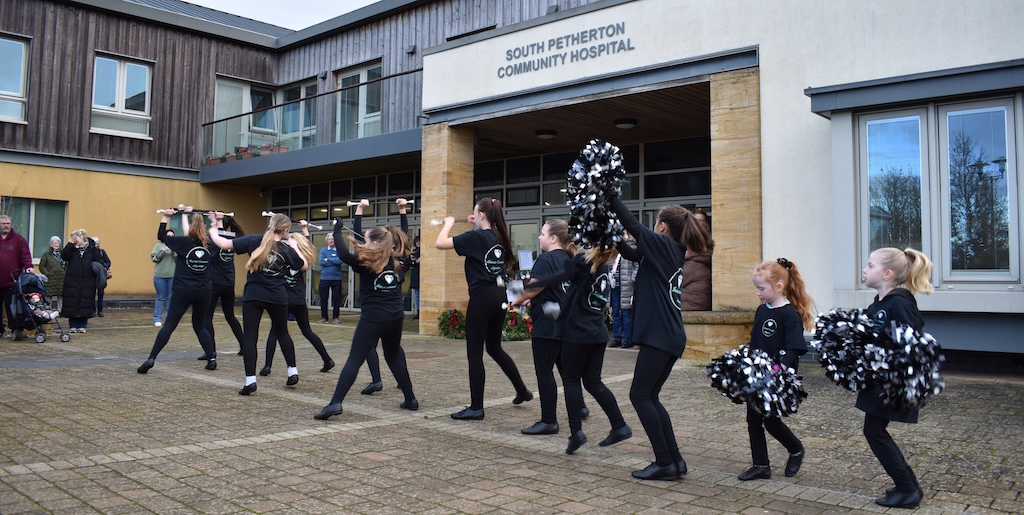
Local majorettes perform in front of the hospital as part of the cultural programme.
These interactions may appear incidental, but they highlight an often-overlooked dimension of public health. The places and institutions that enable people to meet, participate and build relationships can shape wellbeing in powerful ways over time. Yet, healthcare systems are typically organised around responding to illness once it occurs, rather than supporting the social conditions that help people and communities to remain well.
Viewed through this lens, the Christmas Fair becomes a small but revealing example of how community hospital estates can generate value beyond their clinical functions. It created opportunities for participation. It strengthened local networks. It reinforced connections between the hospital and the wider community. Importantly, it achieved these outcomes through activities that were largely voluntary, low-cost and community-led.
This is where the idea of social infrastructure becomes particularly useful. NHS estates are typically evaluated through measures such as utilisation, condition, operational performance and clinical activity. These are important indicators, but they do not fully capture the contribution that a community hospital can make to the place in which it sits. Viewing community hospitals as social infrastructure introduces a broader perspective, one that considers how the estate contributes to community participation, neighbourhood resilience and local wellbeing, alongside its clinical role.
Many community hospitals already occupy a trusted position within neighbourhood life. They are familiar places, often supported by volunteers, charities and local networks. They are institutions that people encounter at significant moments in their lives, but they are also physical assets embedded within communities. This unique position gives them the potential to contribute to wellbeing in ways that extend beyond clinical care.
The Christmas Fair demonstrated how adaptable these environments can be when viewed through a social infrastructure lens. Waiting rooms became places for conversation and mingling. The education room became Santa’s grotto. Outdoor spaces became venues for local enterprise and community performance. Reception areas became places where people chatted. These temporary transformations revealed a degree of functional flexibility that is rarely reflected in conventional estate utilisation metrics. The spaces were not being used differently instead of delivering care; they were demonstrating how healthcare assets can support multiple forms of value at different times and for different groups of people.
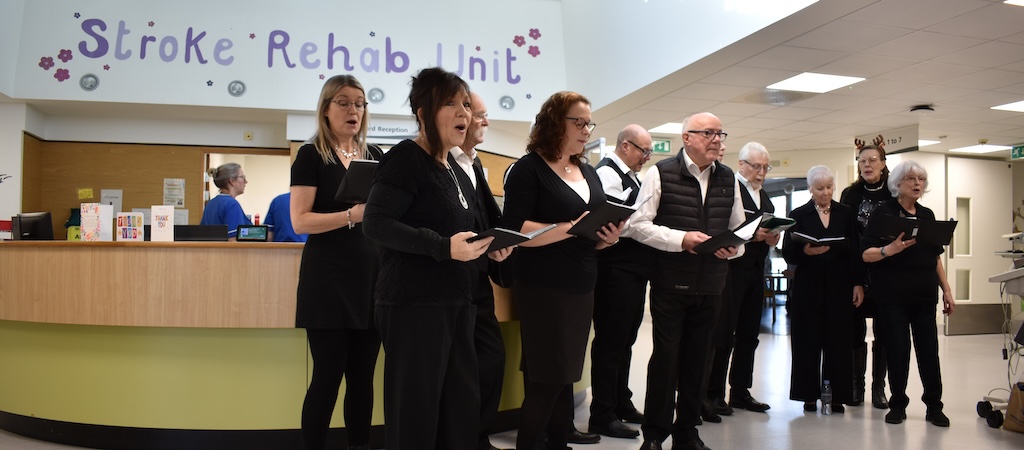
Singers perform for patients in the Stroke Rehabilitation Unit
The implications extend well beyond the physical environment itself. If community hospitals can function as social and civic infrastructure, then questions of estate strategy become inseparable from questions of community wellbeing. How assets are utilised, what activities they accommodate and how accessible they are to local communities all become strategically important considerations. Traditional estate metrics such as occupancy, throughput and operational efficiency remain essential, but they provide only a partial picture of value. They tell us how a building performs as clinical infrastructure, but much less about how it performs as a neighbourhood asset.
The South Petherton study suggests that broader forms of value deserve greater attention within estate planning and investment decisions. If community hospitals contribute to social participation and strengthen local networks, then these outcomes should form part of the conversation about what successful healthcare estates look like. This is not an argument for replacing clinical priorities. Rather, it is an argument for recognising that community hospitals can generate value in ways that are not currently being captured by existing approaches to estate evaluation.
To address this, I created a set of design principles intended to support this broader vision. These include designing for everyday encounter, enabling flexible civic use, supporting multigenerational participation, recognising conviviality as therapeutic, designing for low-barrier participation and embedding community enterprise. Together, they offer a practical framework for thinking about how community hospitals can support social life alongside clinical care.
What is particularly striking is that many of these principles do not require entirely new buildings or major capital investment. Rather, they invite us to look differently at the spaces, relationships and activities that already exist within community hospitals. The Christmas Fair revealed how waiting rooms, education spaces, entrances and outdoor areas could take on additional functions that brought people together and strengthened the hospital’s connection to the community around it. The potential was already there; the event simply made it visible.
Equally, this is not solely a question of design. The extent to which community hospitals can function as social infrastructure depends on organisational choices as much as physical ones. It requires leadership that values community participation, governance that enables (rather than constrains) local activity, and approaches to evaluation that recognise social outcomes alongside clinical and operational measures. If hospitals are to support the social conditions that contribute to wellbeing, then these ambitions need to be reflected not only in their buildings but also in the way they are managed and understood.
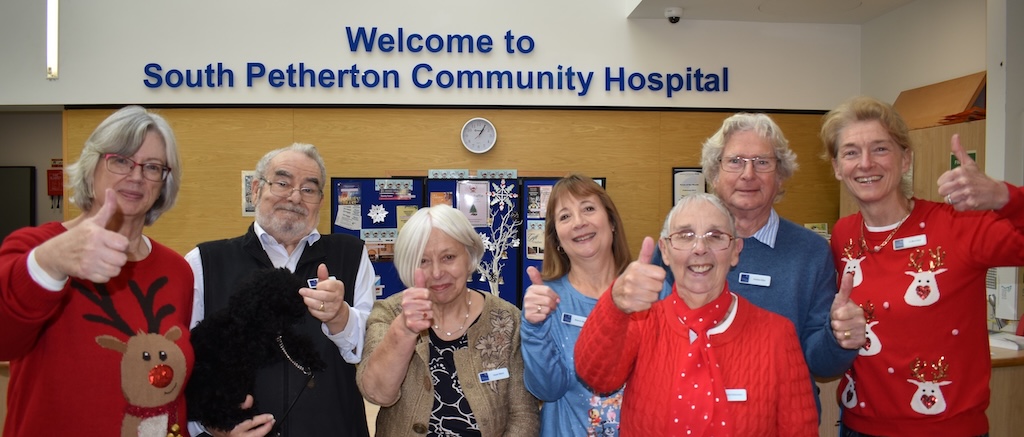
Event volunteers come from many areas in the community, including patients, carers, businesses, staff, craftspeople and local activity leaders.
For me, this is the most important lesson from South Petherton. The Christmas Fair did not transform the hospital into something entirely different; it revealed capabilities that were already present within the estate, but rarely acknowledged. It demonstrated that a community hospital can function simultaneously as a place of treatment and as a setting for community life. These roles are not in competition. In many respects, they reinforce one another.
As the poster and accompanying video are presented at the European Healthcare Design Congress, my hope is that they encourage a wider conversation about how healthcare estates are understood, planned, designed and evaluated. If community hospitals are expected to play a central role within neighbourhood health systems, then we should pay greater attention to the contribution their buildings and spaces make to the communities around them.
The challenge for NHS leaders, estates professionals and policymakers is not simply how to optimise community hospital assets for clinical activity, but how to realise their full potential as social infrastructure. Doing so may require us to expand the way we define value within healthcare estates, recognising that some of the most important outcomes emerge not from the services delivered within a building, but from the relationships, participation and sense of connection that the building makes possible.
Contact us to discuss how responsible digital innovation can support your place-based health goals:
- email: hello@calvium.com
- call: +44 (0) 117 226 2000
Subscribe to the monthly Calvium newsletter to get more insight and inspiration like this in your inbox.