Over the past decade, the circular economy has evolved from a largely conceptual framework into a growing area of public policy. Around the world, an increasing number of governments have published national strategies, roadmaps and action plans that seek to reduce material consumption, improve resource productivity and support more regenerative models of economic development. This reflects a significant shift in political intention, even if the pace and depth of adoption vary considerably between countries.
The publication of strategies is not the same as their implementation. While policy frameworks are proliferating, many governments remain at an early stage of developing the institutions, market mechanisms and partnerships needed to translate ambition into measurable economic and environmental outcomes. As a result, the circular economy appears to be entering a distinct new phase, one in which the principal challenge is no longer, or not necessarily, establishing the case for circularity, but delivering it in practice.
This article shows that the evolution of the circular economy is increasingly defined not by the creation of new policy frameworks alone, but by the emergence of information as a new form of infrastructure. Its central theme is that circular systems can only operate effectively when trusted information flows with products and materials throughout their lifecycle. Digital technologies are therefore not simply tools that support the circular economy; they provide the infrastructure through which trusted information is created, exchanged and maintained at scale.
From policy recognition to operational reality
The growth in circular economy policy over recent years represents an important milestone. Recent analyses by Chatham House and the United Nations Industrial Development Organisation (UNIDO), for example, show a marked increase in the number of national circular economy strategies, roadmaps and action plans. Taken together, these developments suggest that an increasing number of governments now regard resource productivity, material efficiency and circularity as legitimate areas of public policy, although implementation remains unevenly spread between jurisdictions.
The geography of this policy development is also changing. Momentum is increasingly evident across Latin America, where governments are collaborating through the Latin American and Caribbean Circular Economy Coalition and countries such as Brazil are beginning to move from strategy towards implementation. China’s successive Five-Year Plans place increasing emphasis on circular economy principles alongside industrial competitiveness, recycling industries and technological innovation.
Many analysts interpret this as evidence that China increasingly views circular economy principles as supporting broader goals around resource security and high-quality economic development, rather than treating them solely as environmental policy. Within Europe, policy attention is shifting towards implementation through initiatives such as the proposed Circular Economy Act, alongside measures relating to eco-design, sustainable products and secondary raw material markets.
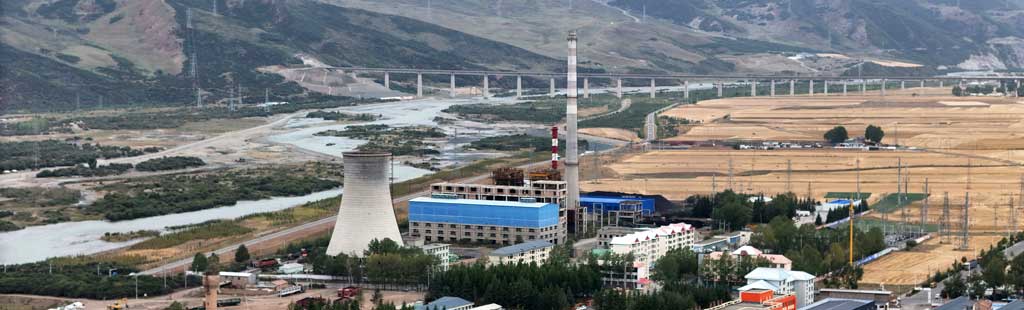
Photo: Wanghao Sang
These developments demonstrate growing political recognition of the circular economy. They do not, however, demonstrate that implementation has become significantly easier. Developing a strategy is fundamentally different from changing how economies operate. Governments must create markets for secondary materials, develop regulatory frameworks, reshape supply chains and encourage new business models while coordinating increasingly complex relationships between producers, consumers, repairers and recyclers.
This is where the nature of the challenge begins to change. The first stage in the evolution of the circular economy focused primarily on building understanding and political commitment. The next stage is concerned with operational delivery. This article suggests that this transition is best understood not simply as a policy challenge, but as an information challenge. Circular systems require products, materials and organisations to remain connected long after the point of sale, creating a level of visibility and coordination that the linear economy has not required.
Today’s challenge is not policy, it is information
The circular economy is often described as transforming how materials move through the economy. That is true, but it is only part of the story. The next stage of the circular economy also depends on transforming how information moves. Products, materials and organisations must remain connected through trusted information long after the point of sale if circular systems are to operate effectively.
The linear economy is comparatively simple. Products are manufactured, sold, used and eventually discarded. Once they leave the point of sale, relatively little information is needed to preserve their economic value.
Circular systems are fundamentally different. Products may be repaired, upgraded, leased, resold, remanufactured and recycled multiple times throughout their lives. Every one of these decisions depends on trusted information.
Can this product be repaired safely? What materials does it contain? Where did those materials originate? Which components can be recovered? Has it already been refurbished? What is its remaining useful life? Without reliable answers to these questions, circularity becomes slower, riskier, more expensive and, in some cases, impossible.
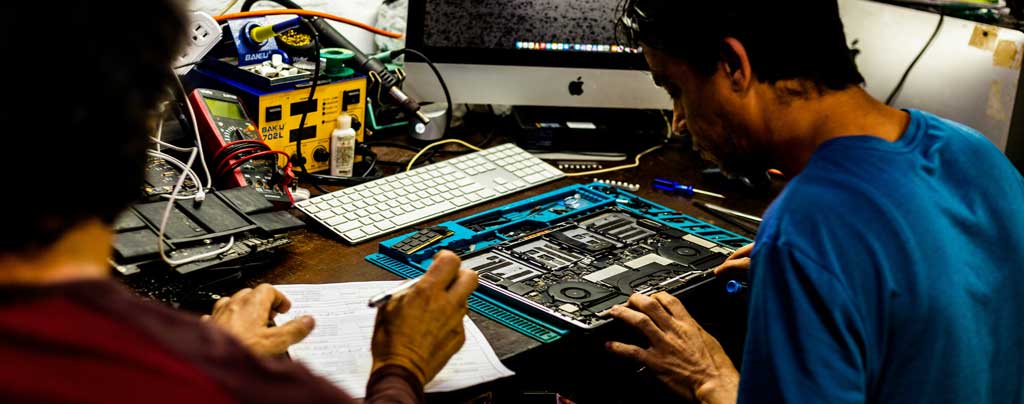
Photo: Ricardo Iv Tamayo
Consider a laptop being refurbished ten years after it was manufactured. Without reliable information, a repairer may have no way of knowing which components are fitted, whether replacement parts remain compatible or whether hazardous substances are present. Now imagine the same device carrying a trusted digital identity throughout its life. Repair becomes simpler, resale becomes more valuable, recycling becomes more precise and regulators gain confidence that environmental obligations have been met. The physical product has not changed; the information associated with it has, and that information fundamentally changes its economic value.
The challenge is therefore no longer simply to design better policies or encourage different behaviours. It is to create an information ecosystem capable of supporting products, materials and organisations throughout increasingly complex lifecycles.
Need a digital partner to sustainably navigate system complexity?
Contact us – email hello@calvium.com or call +44 (0) 117 226 2000.
Better economics depends on better information
Much has been written about the economic barriers to the circular economy. Virgin materials frequently remain cheaper than recycled alternatives. Markets for secondary materials are still developing. Existing financial models mostly reward throughput rather than long-term value retention. These are genuine barriers, but many are rooted in information as much as economics.
Economists have long recognised that markets function more efficiently when information asymmetries are reduced. This principle is equally relevant to the circular economy, where decisions about repair, remanufacture and reuse depend upon confidence in the provenance, condition and composition of products and materials.
Manufacturers will only purchase secondary materials if they trust their quality and provenance. Investors require robust evidence of environmental performance. Consumers increasingly expect sustainability claims to be substantiated rather than asserted. Regulators need accurate information to determine whether policy interventions are achieving their objectives.

Photo: Heather Green
When information is incomplete, inaccessible or unreliable, uncertainty increases. As uncertainty increases, transaction costs rise, investment slows and markets struggle to mature. Viewed through this lens, the evolution of the circular economy depends upon reducing information asymmetry as much as correcting market failures. Better information creates more efficient markets because it reduces risk and builds confidence between participants who may never interact directly.
The battery passport introduced under the EU Battery Regulation provides an emerging example of this principle. By creating a persistent digital record of a battery’s composition, provenance, carbon footprint and performance throughout its lifecycle, they are intended to enable manufacturers, regulators and recyclers to make more informed decisions about reuse, refurbishment and material recovery. The battery itself remains important, but the trusted information attached to it increasingly determines how much value can be retained over successive lifecycles.
The economics of circularity therefore depend upon information flowing as effectively as materials. Digital technologies matter because they provide the infrastructure through which that trusted information is created, preserved and exchanged.
At Calvium, we’ve built asset certification and tracking platforms for organisations in highly regulated sectors. For example, we created a dynamic asset management system which could be used by small or large enterprises, enabling the tracking, locating and tracing of components. In addition to real-time monitoring of stock levels and locations, it aided regulation compliance through supporting attachment of additional specifications and documentation to individual assets.
The cloud-based platform enabled full asset lifecycle tracking, from asset configuration, purchasing and warehouse management, through production, to aftermarket sales and services. This life-long component traceability supported adherence to compliance and statutory requirements.

Coordination is an information challenge
Policy discussions frequently identify coordination as one of the biggest barriers to scaling the circular economy. As more countries develop national strategies, differences in regulation, product standards, reporting requirements and definitions of waste and secondary materials create increasing complexity for businesses operating internationally. Those challenges are real, but regulation alone is not the limiting factor.
Circular supply chains depend upon products and materials moving between manufacturers, logistics providers, repair organisations, recyclers, regulators and consumers. At every transition there is the potential for information to be lost. If trusted information cannot travel alongside physical products, even well-designed policy frameworks become harder to implement, or downright impossible.
This is why coordination should be understood as an interoperability challenge as much as a governance challenge.
Industry is already moving in this direction. Catena-X, developed by a consortium of automotive manufacturers and suppliers, is creating interoperable data spaces that enable trusted information about materials, components and sustainability performance to be exchanged across the automotive value chain. While its objectives extend beyond circularity, it demonstrates growing recognition that information sharing is becoming as strategically important as material flows themselves.
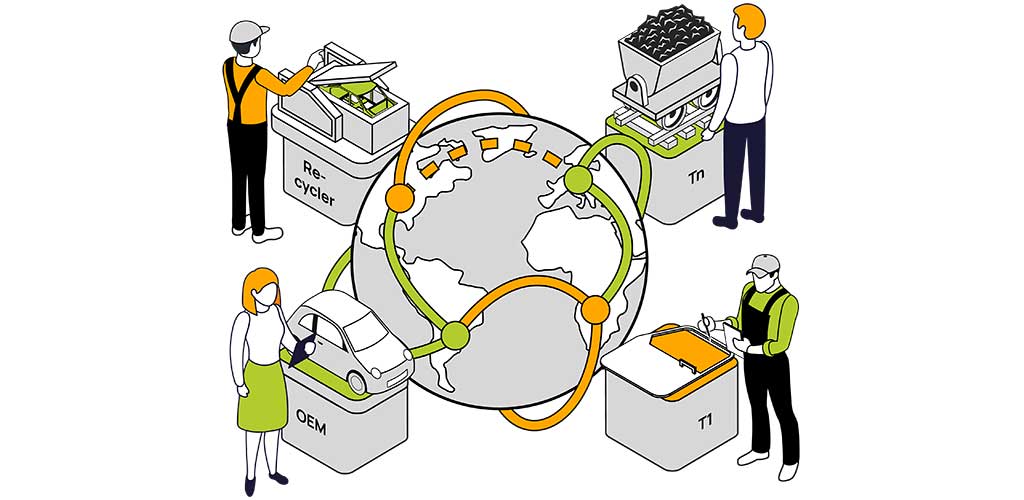
Catena-X is a data ecosystem for sovereign data exchange, enabling companies and service providers to collaborate securely. Illustration: Cantena-X
In an increasingly fragmented geopolitical landscape, complete policy alignment may be unrealistic. Shared information infrastructure may therefore prove to be one of the most practical ways of enabling circular systems to function across organisational and national boundaries. The second stage in the evolution of the circular economy will depend not only upon coordinated policy, but upon coordinated information.
Information infrastructure is the new circular infrastructure
When discussions turn to infrastructure, most people think about physical assets: recycling facilities, remanufacturing plants, logistics hubs, transport networks or renewable energy systems. These remain essential, but the evolution of the circular economy requires another, less visible form of infrastructure.
Information infrastructure comprises the digital identities, common standards, interoperable platforms, governance arrangements and trusted data that enable products, materials and organisations to exchange information throughout multiple lifecycles. It allows a product’s history, composition, repair record and environmental characteristics to remain connected to the product itself, regardless of who owns it or where it travels.
Importantly, information infrastructure is not a single technology but an ecosystem of standards, identities, governance and interoperable services.
Digital Product Passports, common product identifiers, interoperability standards, secure data-sharing frameworks, artificial intelligence, digital twins and connected sensors all contribute to this ecosystem. Together they create the conditions in which circular decisions become possible because every actor in the value chain can make decisions using trusted information rather than assumptions.
The European Union’s Digital Product Passport framework, introduced through the Ecodesign for Sustainable Products Regulation, is intended to preserve information about products throughout their lifecycle so that manufacturers, repairers, consumers and recyclers can make better-informed decisions. Whether implementation ultimately fulfils this ambition remains to be seen, but the policy direction is significant. It recognises that preserving information may become as important as preserving materials.
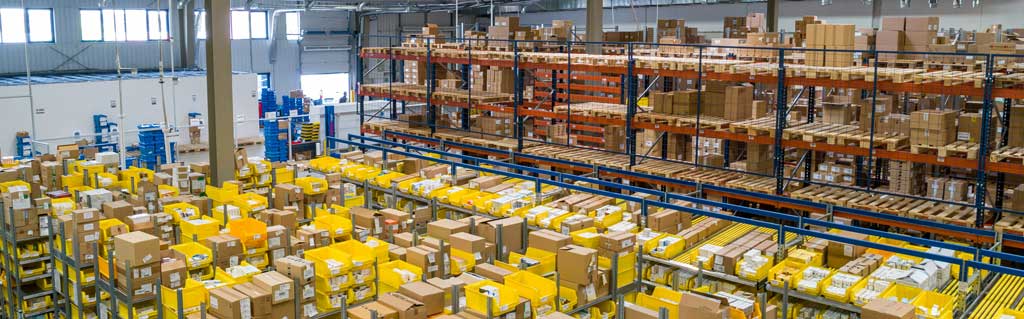
Photo: Adrian Sulyok
This distinction matters because circular economies are fundamentally coordination systems. They depend upon independent organisations making compatible decisions over many years. That coordination cannot rely solely on regulation or goodwill. It depends upon information that is accurate, accessible and capable of moving with products and materials throughout their lifecycle.
Information infrastructure therefore becomes as fundamental to the circular economy as transport infrastructure was to the industrial economy.
Building the conditions for scale
Recognising information as infrastructure changes how implementation should be approached. Investment in recycling facilities, remanufacturing capability and repair networks remains essential, but physical infrastructure alone cannot deliver a functioning circular economy. It must be complemented by information infrastructure that enables products, materials and organisations to exchange trusted information throughout increasingly complex value chains.
This has important implications for policymakers, businesses and innovation ecosystems. Governments should consider common data standards and information infrastructure as integral components of circular economy policy rather than separate digital initiatives. Businesses should recognise trusted data and interoperability as strategic capabilities that create competitive advantage within emerging circular markets. Innovation organisations and place-based partnerships have an opportunity to demonstrate how digital technologies, policy and market development reinforce one another in practice.
It would, however, be premature to suggest that information infrastructure alone will deliver a circular economy. Market incentives, regulation, investment, consumer behaviour and industrial capability remain essential. Digital technologies cannot compensate for weak policy or ineffective economic incentives. They increasingly appear, however, to provide a necessary condition for implementation at scale. Without trusted information, many of the policy instruments now being introduced – From Digital Product Passports to Extended Producer Responsibility (EPR) – become significantly harder to operate effectively.
This broader understanding of infrastructure also changes how we think about investment. Previous industrial revolutions required roads, ports, railways and energy systems because they enabled goods to move more efficiently. The circular economy requires equivalent investment in information infrastructure because information has become essential to maintaining the value of those goods throughout multiple lifecycles.
The evolution continues
The first stage in the evolution of the circular economy established a compelling vision for a different economic future. It demonstrated that designing out waste, extending product lifecycles and reducing dependence on virgin resource extraction are not simply environmental aspirations but increasingly important economic objectives.
The next stage asks a more demanding question: can those principles become operational at scale?
The central argument of this article is that this challenge should no longer be understood solely as one of managing material flows. It is equally a challenge of managing information flows. The circular economy is often described as keeping materials in circulation. In reality, materials can only circulate effectively when trusted information circulates with them.
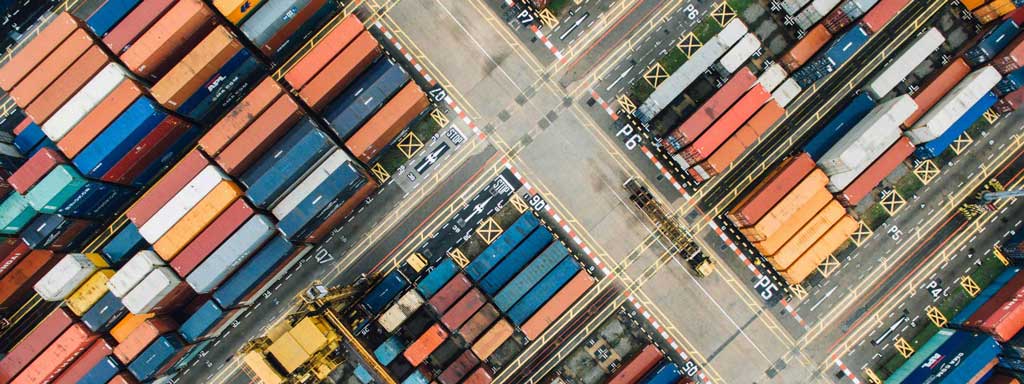
Photo: Chuttersnap
Answering that challenge requires more than additional policy. It requires products with persistent digital identities, interoperable systems capable of exchanging trusted information across fragmented value chains, and information infrastructure that enables markets, regulators, businesses and consumers to make better decisions.
Without trusted data, interoperable systems and digital identities, circularity risks remaining an ambitious policy agenda supported by isolated examples of innovation. With them, the conditions begin to emerge for circular systems to become commercially viable, internationally connected and capable of transforming economies.
If the industrial economy was built on infrastructure that enabled the movement of goods, the circular economy will be built on infrastructure that enables trusted information to move with them. Recognising information as infrastructure fundamentally changes how we think about implementation. Circular systems can only operate at scale when trusted information flows with products and materials throughout their lifecycle.
The question for every organisation is no longer whether the circular economy matters, but whether it is investing in the information infrastructure that will make it work. If you’re exploring that challenge, we’d be delighted to continue the conversation.
About Calvium
Calvium is a digital innovation company and certified B Corp that helps organisations tackle complex societal and environmental challenges. We combine expertise in research, human-centred design, software engineering and digital transformation to create digital platforms that connect people, systems and information to deliver lasting impact.
We believe the future of the circular economy depends on trusted information as much as material flows. From interoperable platforms and connected services to trusted data and digital identities, we help organisations build the information infrastructure needed to turn circular economy ambition into operational reality.
Contact us to deliver digital innovation for positive impact.
- Email: hello@calvium.com
- Call: +44 (0) 117 226 2000
Subscribe to the monthly Calvium newsletter to get more insight and inspiration like this in your inbox.