
Climate resilience is no longer just a sustainability concern but a board-level operational matter. For organisations that own and manage physical assets – whether aircraft fleets, manufacturing facilities, utility networks or logistics infrastructure – the ability to anticipate climate-related disruption is critical to long-term performance, investment planning and improving the quality of decision-making.
Extreme heat, flooding, drought and other climate-related hazards are already influencing infrastructure planning and operational risk assessments across multiple sectors – from energy and transport to agriculture and real estate. There is growing business consensus that whole-system approaches to climate resilience are necessary.
Yet, despite the growth of climate data platforms and resilience frameworks, many organisations still lack tools that connect climate projections directly to the condition, maintenance and operational performance of physical assets. Without robust resilience tools, organisations lack the insight needed to make sustainable decisions and protect their assets for the long term.
What is climate resilience modelling?
Climate resilience is defined as the ability of systems, organisations or communities to anticipate, adapt to and recover from climate-related hazards. Institutions including the UK Green Building Council and IBM emphasise factors such as preparedness, adaptability and continuity as key indicators of resilience.
Climate resilience modelling is the method by which climate projections are combined with operational, environmental and socioeconomic data to assess future risks and adaptation options. Given risk and resilience is heavily dependent on place and context, for example regional and global, definitions vary by sector and geography. But resilience modelling includes the use of simulations, analytics and scenario testing to understand how systems may perform under future climate conditions.
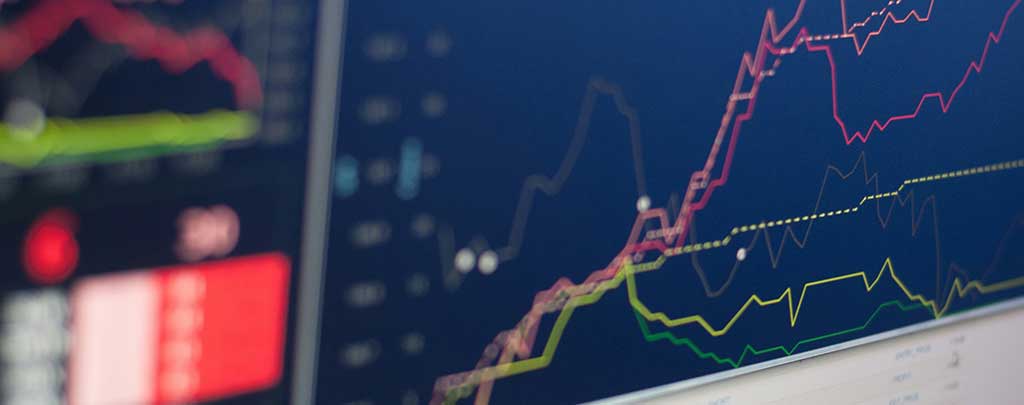
Photo: Nicholas Cappello
The outputs of this modelling are delivered through climate resilience dashboards: interactive digital tools that visualise climate hazards, vulnerabilities and adaptation indicators. These dashboards typically allow users to:
- model future scenarios based on emissions trajectories
- visualise flooding, heat stress or infrastructure vulnerabilities
- set risk thresholds
- compare geographical exposure
- layer multiple datasets for planning and investment analysis
There are several existing dashboards that demonstrate how this works on both a national and international level.
The OECD’s climate indicators platform, for example, tracks greenhouse gas emissions, mitigation policies and temperature-related metrics across member countries. The International Monetary Fund (IMF) has developed tools examining the intersection between climate and macroeconomic stability. The European Union has created a range of resilience-related dashboards spanning environmental, economic and geopolitical indicators.
Meanwhile, projects such as the UK’s Maximising UK Adaptation to Climate Change (MACC) Hub explore risks including extreme heat, drought and flooding, while Bristol City Council’s “Keep Bristol Cool” platform maps heat vulnerability across neighbourhoods to support urban planning and public health responses.
These platforms demonstrate the increasing sophistication of climate intelligence. However, most are designed for policymakers, planners, researchers or regional infrastructure strategy, not for day-to-day operational asset management.
The gap in physical asset management
As established, many existing resilience dashboards are highly effective at identifying where climate hazards may occur. Fewer are designed to show how specific assets may deteriorate or fail under future climate conditions.
Asset management already relies heavily on condition monitoring and operational performance data. Infrastructure owners, aviation operators, manufacturers and utilities all depend on accurate lifecycle forecasting to manage safety, maintenance schedules and capital expenditure.
Climate resilience modelling is what gives foresight into future environmental conditions. For example:
- How might prolonged heat exposure affect the lifecycle of aircraft components?
- Which substations are most vulnerable to future flooding thresholds?
- How will increased heat stress affect rail infrastructure performance?
- Which assets become operationally critical under severe weather scenarios?
These are not only environmental questions; they have financial implications too.
The Institute of Asset Management and related professional bodies have long emphasised that effective asset management is fundamentally about balancing cost, risk and performance over an asset’s lifecycle. Climate change increasingly affects all three variables simultaneously.
And given many organisations still manage climate risk separately from operational asset data, limiting the effectiveness of resilience planning is likely to be limited.
Tools that integrate climate projections into asset management systems can help organisations to:
- prioritise maintenance effectively
- justify resilience investment
- estimate long-term operational costs
- identify vulnerable assets early enough to intervene
- determine whether adaptation or replacement is more economically viable.
Photo: This is Engineering
The role of operational envelope tools
Operational envelopes are commonly used in sectors such as energy, oil and gas, manufacturing and aviation to define the safe and efficient operating boundaries of systems and equipment.
The scope and definition of these tools varies by industry but the fundamental principle is the same: to maintain system integrity. In a digital context, for instance, an operational envelope refers to a system, software or algorithm that defines the optimal constraints within which a system can operate without causing damage.
By comparison, in the energy sector, “dynamic operating envelopes” have been examined for managing distributed energy resources and electricity grid performance in real time.
Given the pace of climate change, the challenge now is that historical operating ranges may no longer reflect future conditions. Assets designed around historical temperature norms or flood probabilities, for example, will increasingly experience conditions outside their original design assumptions.
This has implications for:
- safety margins
- maintenance frequency
- insurance exposure
- operational uptime
- replacement planning
Integrating climate resilience modelling into operational envelope tools may help organisations to make safer business decisions.Rather than relying solely on historical operating data, future-oriented systems could incorporate:
- projected heat scenarios
- flood probability modelling
- infrastructure interdependencies
- environmental stress thresholds
- supply chain vulnerabilities
This would allow organisations to test how operational limits may change over time and to identify adaptation strategies before failures occur.
Climate Impact Reports
Inform your decision-making with trusted climate, weather and environmental data. Get clear, practical Climate Impact Reports for all of your office locations that help you understand how conditions are likely to change over time, including heat, rainfall, wind, air quality and nearby waterways. We do the heavy lifting of finding, processing and explaining the right datasets so you can focus on what it means for comfort, operations, safety and long-term planning.
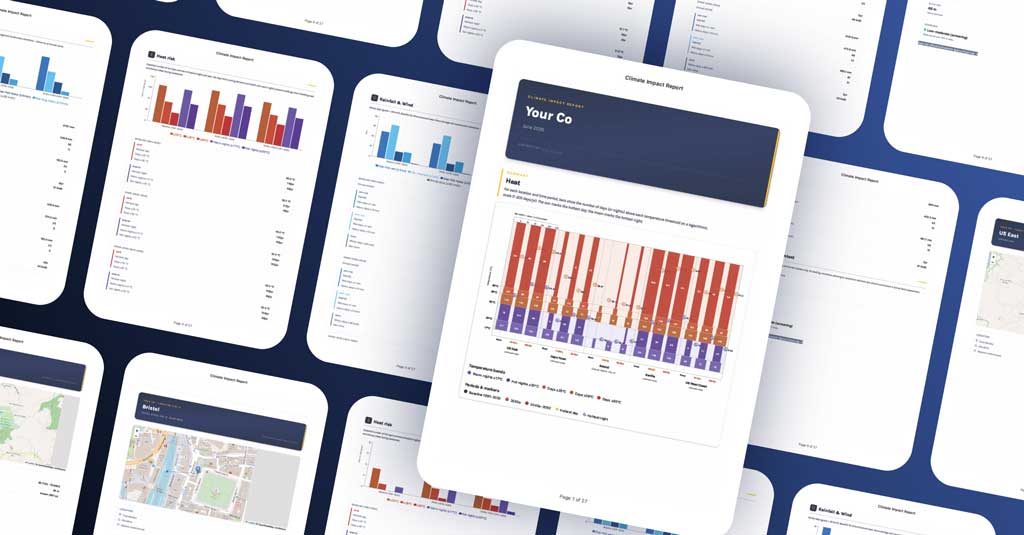
Find out more, and book a meeting with CEO Jo Reid to share your requirements.
From sustainability reporting to operational intelligence
Climate resilience dashboards are attracting greater interest not only for sustainability reporting, but their ability to support operational and investment decisions.
The traditional functions of these dashboards – emissions tracking and ESG disclosure – remain important, particularly given evolving regulatory requirements and investor expectations. However, a well-designed resilience dashboard can help organisations answer important questions such as:
- Which assets are likely to become higher-risk under future climate conditions?
- Where should maintenance investment be prioritised?
- Which sites are most exposed to cascading operational failures?
- How might climate conditions alter asset replacement cycles?
- What are the likely operational consequences of delayed adaptation?
This is particularly relevant in sectors with long asset lifecycles. Infrastructure, aerospace and utility assets are often expected to operate for decades, so the decisions made today may need to account for environmental conditions significantly different from those experienced in the past.
According to the European Commission, adaptation planning increasingly requires long-term systems thinking rather than isolated risk management interventions. Climate resilience dashboards support this by translating large-scale climate datasets into operationally relevant insights.
For example, the UK’s Climate Resilience Demonstrator (CReDo) digital twin project explores resilience across interconnected infrastructure systems including energy, telecoms and water networks; engineering consultancy WSP’s Canary platform focuses on environmental and infrastructure risk analysis for built assets; Smart Resilience provides asset-level climate risk information to support operational and supply chain assessments.
These examples demonstrate growing recognition that climate risk cannot be treated solely as a high-level sustainability issue. It increasingly affects operational continuity and infrastructure resilience, and will likely become more important as climate adaptation expectations mature and become more urgent.
Areas where dedicated climate resilience dashboards can aid further development in this area include:
- climate-linked maintenance forecasting
- resilience-adjusted lifecycle modelling
- work-order integration
- criticality scoring
- resilience return-on-investment analysis
- condition monitoring combined with climate exposure.
Photo: Paul Marlow
The commercial case for climate resilience dashboards
Organisations with significant physical assets already operate in environments shaped by uncertainty, maintenance constraints and operational risk. Climate change introduces additional variability that compounds those risks.
Resilience dashboards can help organisations move from reactive responses to more anticipatory planning. While that does not eliminate uncertainty entirely – climate projections remain probabilistic, and scenario modelling always contains assumptions – scenario-based planning is already standard practice in many operational and financial disciplines.
For executives, resilience dashboards may support capital allocation and long-term investment strategy. For operational teams, they may improve maintenance prioritisation and infrastructure planning. For risk managers, they may strengthen organisational preparedness and regulatory reporting.
Most importantly, they create a shared operational picture that connects climate intelligence to business performance.
As climate adaptation becomes more central to infrastructure and operational planning, dashboards that integrate environmental forecasting with asset management are likely to move from specialist tools to mainstream operational systems.
For organisations responsible for critical physical infrastructure, the question is not whether climate resilience modelling is relevant, but whether existing operational systems are capable of using it effectively.
Explore what benefits a climate resilience dashboard could offer your organisation – contact us:
- email: hello@calvium.com
- call: +44 (0) 117 226 2000
- book a meeting: select a time in Jo Reid’s calendar
Subscribe to the monthly Calvium newsletter to get more insight and inspiration like this in your inbox.