To meet the UN’s 2030 Sustainable Development Goals, society must innovate with care and at speed. Designing more sustainable places is a crucial part of the solution, with both urban and rural landscapes having interconnected roles to play.
Jackie Copley is the Campaigns Lead for Campaign for the Protection of Rural England (CPRE) which has campaigned for better countryside outcomes for the past 100 years.
Jackie is a Chartered Planner with nearly 30 years’ experience across the private, public and charitable sectors, leading large-scale brownfield regeneration partnerships in Manchester and Salford before moving into consultancy with firms including Atkins.
For the past 13 years, Jackie has been a key figure at CPRE, initially supporting local communities across the North West with rural, neighbourhood and spatial planning. She is a formidable advocate for evidence-based planning, and has successfully challenged controversial, major industrial fracking proposals by demonstrating significant safety and environmental risks. Her work remains dedicated to ensuring the planning system delivers genuine social, environmental, and economic sustainability.
As part of Calvium’s expert interview series on place, environmental and social sustainability, Jackie discusses how collaboration, community engagement and technology can create positive change – and why it is so important that organisations like CPRE exist as champions of the countryside.
Urban sustainability is often discussed in isolation from the countryside. From your perspective, how should cities and rural landscapes be planned together to create genuinely sustainable futures for both?
It’s very much a “yin and yang” relationship. People living in towns and cities need easy access to green spaces and the countryside, both for their wellbeing and their sense of connection to nature. When urban environments aren’t functioning well, the pressure on rural areas intensifies because people, understandably, look to relocate to places they perceive as healthier or more desirable. In the recent polling conducted with More in Common, proximity to the countryside ranked above factors such as good schools and lower taxes in influencing decisions about where to live.
That’s why urban regeneration is so important. Too often, developers focus on sites that promise the quickest financial returns, rather than investing in places that have experienced long-term decline. A well-functioning planning system should create the conditions for sustainable development by directing investment back into existing communities. Without that strategic approach, we risk what you might call “onion-ring” development, where growth and investment leapfrog outward onto the rural-urban fringe, instead of revitalising the places that already exist.
From CPRE’s perspective, spatial planning is critical. We would advocate for green corridors and connected routes that link urban and rural environments; benefiting both people and wildlife. Fundamentally, it’s about recognising that the countryside is not separate from urban life, but essential to it.
At the same time, protecting the countryside from inappropriate development remains vital, not only for farming and biodiversity, but also for climate resilience. Sustainable futures depend on getting that balance right: creating thriving, liveable cities while safeguarding the landscapes and ecosystems that support everyone.
CPRE advocates for a thriving, beautiful countryside that benefits everyone. Are there examples where urban-rural collaboration has worked particularly well? What strategies have supported their success?
In Manchester, there is now a circular ringway of 200 connected footpaths around 10 local authorities, with improved public transport connections making it accessible to groups that wouldn’t traditionally participate in walking.
But this kind of transformation doesn’t just happen by itself, it needs intervention and long-term investment. In the past, programmes like City Challenge and the Single Regeneration Budget helped drive that kind of renewal.
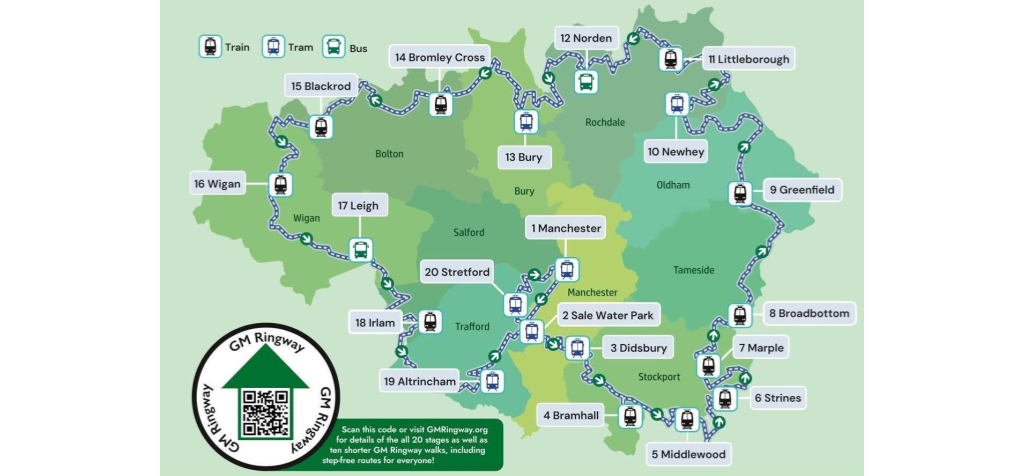
From its start in Manchester city centre, the GM Ringway – Greater Manchester’s walking trail – explores the natural landscapes, waterways and heritage of ten boroughs. Green in every way, all 20 stages of the varied and beautiful 200 mile route are designed to be accessed by public transport. Map: GM Ringway, CPRE Lancashire
You can see a similar approach today at Hadrian’s Wall, where there is a good example of heritage-led regeneration spanning both urban and rural communities. At present, five projects have moved forward for funding through the Borderlands Inclusive Growth Deal. Backed by a £9 million investment programme across Cumbria and Northumberland, the projects are focused on improving infrastructure, making the site more accessible and attracting a wider, more diverse range of visitors to the World Heritage Site.
But now we’re outside of Europe following Brexit, where regeneration funding came from, we need our government to agree a similar level of commitment. Whilst we have a brownfield and English Cities Fund, they tend to be smaller in scale.
CPRE has long championed the protection of rural land. How can better urban design, density and regeneration reduce pressure on the countryside?
Bearing in mind we’ve got a finite amount of land, we need to be much smarter about how we use it. Many of the functions that make city centres thrive, such as public transport, local shops, cultural venues and services, depend on having enough people actually living there to sustain them.
Manchester is a good example of this. In the 1980s and 1990s, the city centre had a relatively small residential population and large areas of underused industrial and commercial land. That made it difficult to justify major investment in infrastructure such as the Metrolink tram system because there simply wasn’t the density of people needed to support it economically.
What changed was a long-term regeneration strategy focused on bringing people back into the city centre. Former warehouses and brownfield sites were redeveloped into housing, mixed-use neighbourhoods and commercial spaces, while public investment was directed towards improving streets, public spaces and connectivity. The expansion of the Metrolink network then became viable because there was a growing population, rising demand and a clearer economic case for investment.
It shows how regeneration and infrastructure investment often go hand-in-hand. Public transport can help drive growth, but it also depends on creating dense, liveable places where enough people live and work to make those systems sustainable in the long-term.
Ultimately, sustainable regeneration comes down to what makes communities work well and what gives people a good quality of life. Getting density right is a big part of that. Low-density housing on the urban fringe can make it much harder to sustain the services people expect – whether that’s GP surgeries, schools, public transport or local shops, because there simply aren’t enough people living nearby to support them efficiently.
Those developments also tend to increase car dependency, which has wider implications for congestion, carbon emissions and climate change. The Climate Change Committee has repeatedly highlighted the need for more compact, connected development patterns that reduce the need to travel long distances by car. In that sense, planning isn’t just about housing numbers, it’s about creating places where homes, services, transport and green space are properly integrated.
If we get urban design and regeneration right, it also reduces pressure on the countryside. By making towns and cities more attractive, liveable and well-connected, there is less demand for continual outward expansion onto greenfield land at the urban fringe. Reusing brownfield sites, increasing density in the right places and investing in public transport all help accommodate growth within existing urban areas, while protecting rural landscapes and supporting improved biodiversity and climate resilience. In that sense, good urban planning and countryside protection are not competing objectives, they are fundamentally linked.
2026 marks 100 years of CPRE. What past work is now guiding us today, and what are the emerging future areas of focus?
There are plenty of good reasons why we should campaign for the countryside. Over the past century, policies such as the National Parks Act and the Green Belt have come through, all geared towards protecting the landscape. These ideas were visionary at the time, recognising that society needs space for nature, farming and recreation, such as holidays.
CPRE played a role in the development of the 1947 Town and Country Planning Act, which nationalised planning rules, so that now every time someone submits a planning application, it’s publicly consulted upon and people have the right to have their voice heard, which is fundamental. But today we face new pressures – from climate change to housing affordability and an aging population – and we need to house people properly, which needs a new strategic layer.
There’s also something really important about community stewardship. There’s a real value in people coming together and quite literally rolling up their sleeves to look after the landscape, whether that’s planting hedgerows, restoring meadows or organising local litter picks. It creates a stronger connection between people and place. Ultimately, protecting what’s good about the countryside isn’t just about conservation; it’s about wellbeing, community and making sure future generations can enjoy these landscapes in the same way we do today – and in better ways, if we improve the environment.
Photo: Leo Perkins
Climate adaptation and biodiversity recovery require action at a landscape scale rather than within isolated boundaries. From your perspective, how can urban areas play a more active role in supporting climate-positive land use beyond their borders – particularly in areas such as food systems, water management and biodiversity restoration?
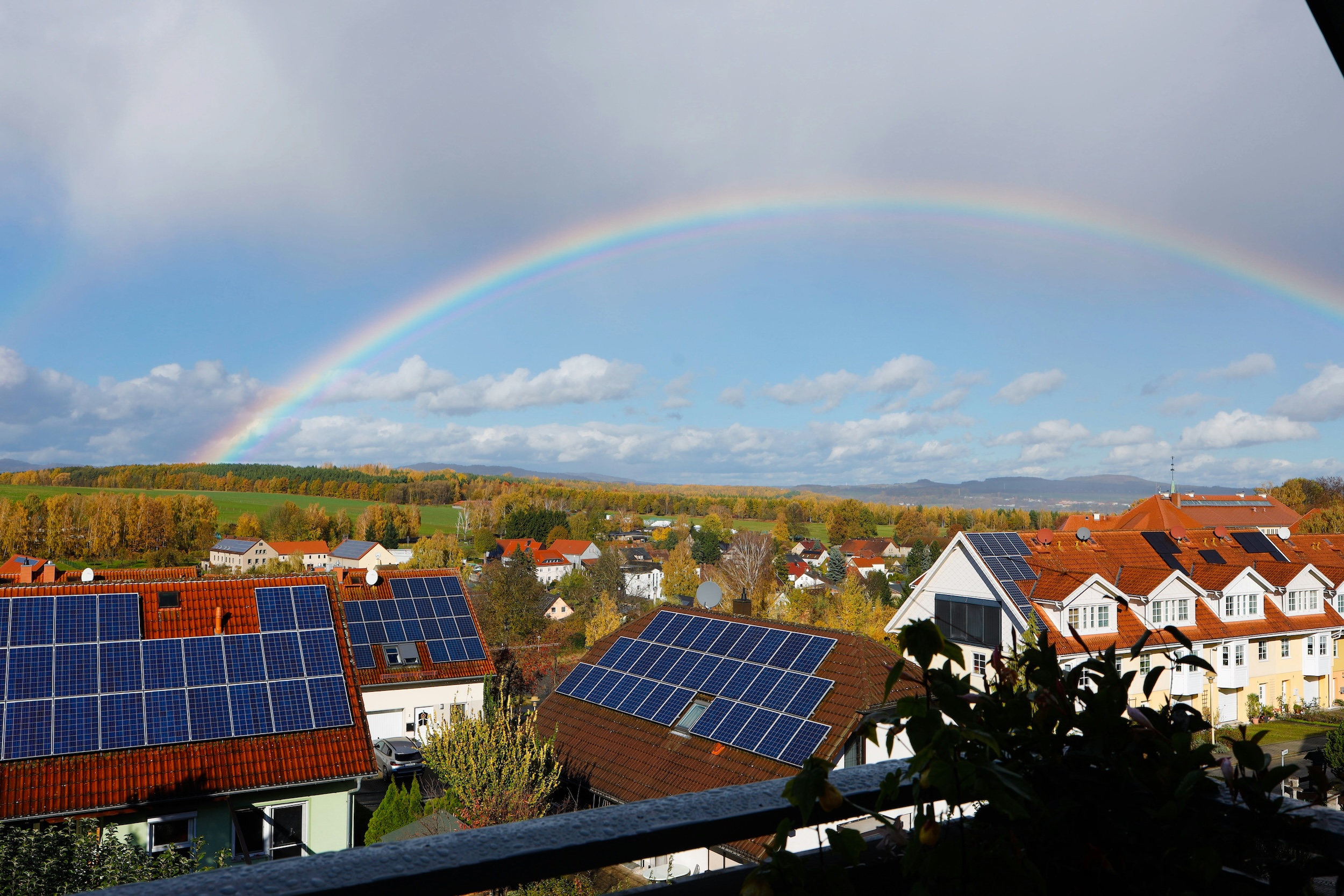
Urban areas depend heavily on rural landscapes for essentials such as food, water and energy, so there is a shared responsibility to support sustainable land management. We strongly support the transition to renewable energy, but we believe cities should make far greater use of rooftops and existing built environments for solar power, rather than relying so heavily on mega solar farms on agricultural land.
The challenge is that once productive farmland is taken out of use, the impacts ripple far beyond farming itself. It affects rural jobs, local supply chains, food production and the wider economies that depend on agriculture. So, the question is not whether we invest in renewable energy, but how we do it in a way that balances climate goals with food security, rural livelihoods and responsible land use.
The way we manage water is becoming one of the most important considerations in how we design and regenerate towns and cities. A big part of that is reducing demand on resources wherever we can — whether that’s energy or water — and thinking much more carefully about how water moves through the landscape.
That’s why sustainable urban drainage systems are so important. Instead of simply funnelling rainwater straight into rivers, where it can worsen flooding downstream, these systems are designed to capture, store and reuse water more naturally. At the moment, huge amounts of money are spent trying to artificially drain wetlands and manage flood risk, and even then, it’s often incredibly difficult to control.
Holding water higher up in the landscape makes far more sense environmentally. It allows wetlands to recover and function properly again, which not only helps reduce flooding but also increases carbon storage and creates richer habitats for wildlife. In other words, better water management can simultaneously support climate resilience, biodiversity recovery and more sustainable urban development.
Channel 4’s TV drama Dirty Business showed us how privatisation of water companies has led to a scandalous practice of polluted water being discharged directly into waterways for profit with negative environmental and human health impacts.
There needs to be a different way. The recently introduced strategic land-use framework of DEFRA is welcomed, brought about in part due to CPRE’s evidence that it was necessary, but there is more to be done to better link housing, farming, energy and nature recovery to ensure cities and countryside support each other rather than compete.
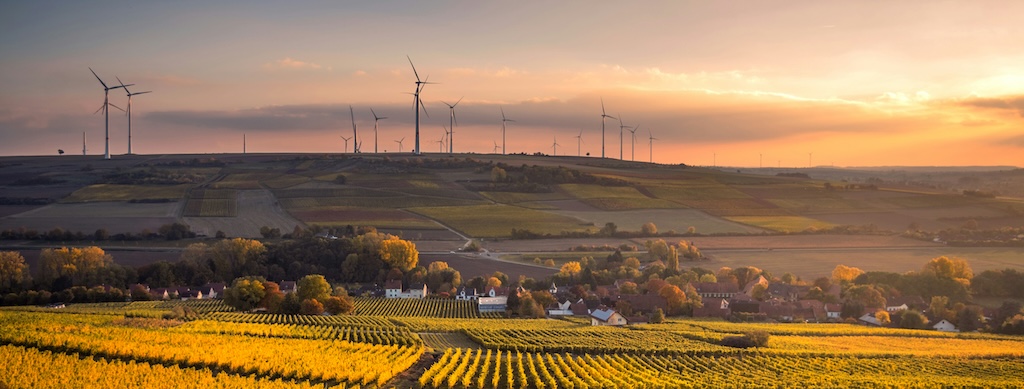
Photo: Karsten Wurth
Community voice is central to CPRE’s work. How can cities better empower local communities to shape development in ways that protect nearby countryside and increase local participation?
Planning has become incredibly complicated and, for many people, deeply inaccessible. Most people don’t know how to engage with local strategic planning, let alone navigate the process of responding to a planning application.
But if you’re trying to shape places in a way that genuinely works for communities, you have to involve local people and draw on their lived experience. Otherwise, there’s a real risk of designing solutions for problems that have been misunderstood from the outset.
That means engagement has to happen at a very local level and involve a much wider range of voices — young people, older residents and people from different backgrounds. The challenge is finding creative ways to meet people where they are and make participation feel approachable rather than technical or intimidating.
We’ve seen some really interesting examples of this through a project we worked on with the University of Brighton and CPRE Sussex. The initiative brought local people together in places like parish councils, schools and community workshops to explore how landscapes might change in the future, including conversations around where renewable energy infrastructure such as wind turbines could be located. Rather than relying on technical documents, young student artists used model-making, maps and storytelling to spark conversations around these quite complex planning issues. The models were then enhanced using augmented reality technology, allowing people to visualise how changes could look within the landscape itself.
What made the project so effective was that it turned planning into something tangible and collaborative. It gave people a much clearer sense of how decisions might affect the places they care about and created a more open, constructive conversation around change.
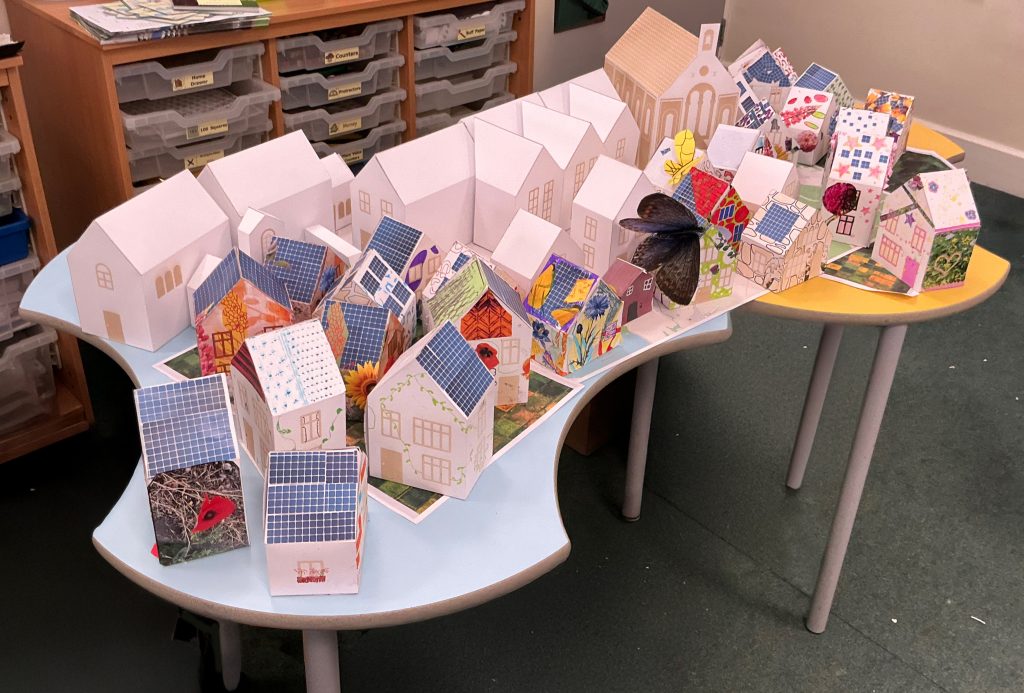
House models from a schools workshop show use of solar panels, wildlife, nature and different materials for buildings.
How can nature-led regeneration help balance social, environmental and economic priorities?
The idea, pushed by the government, that nature has somehow been set against housing and economic growth is a deeply misleading narrative, and one that many environmental organisations such as CPRE have pushed back against strongly. Groups including the RSPB and The Wildlife Trusts have repeatedly argued that nature protections are being unfairly portrayed as barriers to development, despite evidence that healthy ecosystems are fundamental to long-term economic resilience. The Wildlife Trusts’ recent report Planning & Development: Nature Isn’t the Problem directly challenged claims that environmental protections for bats and newts are blocking growth, while RSPB chief executive Beccy Speight recently criticised political rhetoric that frames nature as an obstacle to development.
In reality, the economic costs of environmental decline are becoming increasingly difficult to ignore. Insurance companies, for example, are already seeing the financial impact of more frequent flooding on homes and businesses, and there is growing recognition that nature-based solutions – from wetland restoration to sustainable drainage systems – can reduce long-term costs far more effectively than continually relying on expensive engineered defences.
When those kinds of market signals become stronger, governments tend to respond. But fundamentally, if the environment is properly cared for and planned well, it can do a huge amount of the heavy lifting when it comes to climate resilience. Natural systems help absorb floodwater, cool urban areas, store carbon and support biodiversity – all while improving people’s quality of life! What’s not to love and invest in?!
Of course, there will always be resistance to change. But part of the role of planners, campaigners and place-makers is being able to communicate a positive vision of what better places could look like. Rather than treating nature as a constraint on growth, we should recognise it as essential infrastructure, something that supports healthier communities, stronger economies and ultimately saves money in the long run.

The National Trust’s Nature is our Future campaign aims to mobilise public support and promote the importance of nature in policy discussions. Photo: Clement Falize
How can digital technology support sustainable placemaking, meaningfully?
Technology can play a hugely positive role in making planning more open, accessible and genuinely collaborative. For too long, planning processes have relied on technical documents, formal consultations and public meetings that many people either don’t know about or don’t feel comfortable engaging with. Digital tools create opportunities to involve a much broader range of voices and make complex ideas easier to understand.
That can take many forms. Interactive mapping platforms allow communities to pinpoint local issues and opportunities in real time. Digital twins and 3D modelling can help people visualise how developments might change an area before anything is built. Augmented and virtual reality can bring future landscapes to life, while online engagement platforms, social media and mobile apps make it easier for people to contribute ideas in ways that fit around their everyday lives. AI and data analysis also have the potential to help planners better understand how people use spaces and identify where investment is most needed, though AI also has its own environmental and social impacts.
We saw the value of this in the project that we ran with creative students which I mentioned earlier. What made it so effective wasn’t the technology itself, but the way it encouraged conversation, curiosity and participation around issues that can often feel technical or abstract.
Ultimately, digital technologies should support dialogue rather than replace it. The goal isn’t to automate placemaking, but to make it more inclusive, transparent and imaginative. When used well, technology can help people feel more connected to decisions about the places they live and give communities a much stronger voice in shaping their future.

Photo: Play England
We should hear laughter in our public spaces, how can places unlock happiness?
If people feel happier, more connected and more relaxed, they naturally laugh more. The two really do go hand-in-hand. The challenge is that modern life can feel incredibly pressured. We’re constantly connected, overloaded with information and often moving through spaces that feel functional rather than joyful.
Public spaces have a huge role to play in changing that. The best places give people permission to relax, play and interact with one another. I remember doing some work with designer Wayne Hemingway, who moved into housing development in the 1990s. On one project, he used quite playful, almost guerrilla-style tactics in public green spaces, including writing “more balls please” underneath signs that said “no balls allowed”. It was a simple intervention, but it completely changed the tone of the space.
That’s what good placemaking can do. It creates environments where people feel welcome rather than restricted, where spontaneity and play are encouraged instead of designed out. There’s not much to laugh about if every space is over-regulated and full of signs telling people what they can’t do. But when places feel open, inclusive and human, people start to connect with one another differently.
Laughter often comes from the small things, children playing, people lingering in a square, street performances, community events or simply feeling comfortable enough to spend time outdoors. Designing places that encourage those moments isn’t frivolous; it’s actually a really important part of creating healthier, happier communities.
How can we innovate quickly while still building trust with communities?
The government always says it comes down to speed and cost. Of course, people need to get decisions through the system, but you have to allow people to be involved. Our research shows that when people are genuinely involved in shaping a project and listened to, they’re more likely to support it.
Communities need clear information about the constraints – whether that’s budget, space or environmental limits – so they can contribute meaningfully to decisions. When people see that their input has influenced the final design, trust grows.
Most placemakers want their projects to fly, so they should understand that the reward of engaging people is creating something that will be popular and people will feel proud to have been involved in. That is what meaningful placemaking is all about.
Thank you Jackie for sharing your insight, experiences and exciting projects.
Contact us at hello@calvium.com and +44 (0) 117 226 2000 to deliver sustainable, care-filled and impactful digital innovation.
Subscribe to the monthly Calvium newsletter to get more insight and inspiration like this in your inbox.
More from our Expert Interview series
Hear from other expert practitioners, bringing their lived experience into delivering positive innovation:
- Andrew Lansley, global sustainability and accessibility innovation specialist
- Andrew Morris, Executive Director, British Society of Soil Science
- Ben Hawes, Technology Consultant, Researcher and Associate Director, Connected Places Catapult
- Ceren Clulow, Programme Director, Connecting Cambridgeshire
- Christine Hemphill, Founder, Open Inclusion
- Daisy Narayanan MBE, Public Realm Director, The Crown Estate
- Dan Cook, Assessor, Cambridge Institute for Sustainability Leadership
- Prof Daniel Armanios, BT Professor of Major Programme Management, Saïd Business School, University of Oxford
- Joel Mills, Senior Director, Architects Foundation Communities by Design
- John Worsfold, Head of Solutions Innovation, RNIB
- Ludo Pittie, Head of Landscape, WSP
- Marc Cairns, Managing Director, New Practice
- Mark Hallett, Regeneration Associate, The Good Economy
- Paul Wilson, senior advisor and consultant on smart cities
- Dr Phil Askew, Director of Landscape, Peabody
- Prof Peter Madden, Professor of Practice in Future Cities, Cardiff University
- Steve Sayers, Chief Executive, Windmill Hill City Farm
- Warren Smith, Director of Insight, Innovation and Impact, Posterity Global
- Will Weston, Accessibility and Inclusivity Consultant, All Ways Access