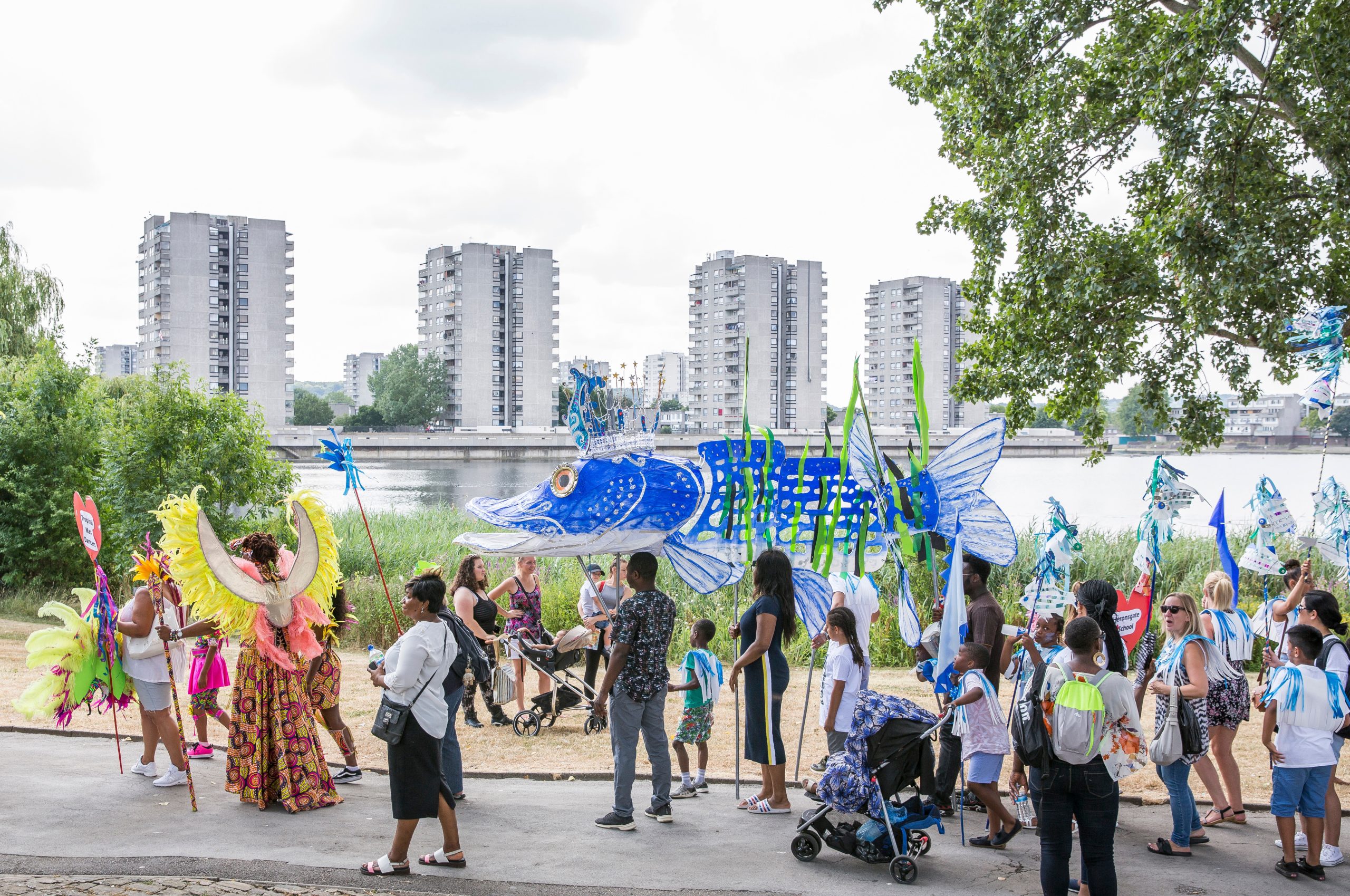
To meet the UN’s 2030 Sustainable Development Goals, new models, mindsets and ways of working are urgently needed – environmentally, socially and economically.
Dr. Phil Askew is the Director of Landscape at not-for-profit housing association, Peabody. His work includes overseeing the delivery of Living in the Landscape – Peabody’s plan for people to make the most of Thamesmead’s vast and varied green spaces and waterways, as part of the organisation’s long-term regeneration of the town.
Phil is a recognised leader in this field, and prior to working for Peabody played a key role in the development of the London 2012 Olympic Park, the UK’s largest new urban park in over a century.
As part of our expert series of interviews on sustainable urban innovation, Phil tells us what motivates him in his work and why taking a landscape-led approach is fundamental.
Can you share a bit about your background and what motivates you in your work?
My first ever job was in a plant nursery on a youth opportunities programme. I realised I loved working outside and I loved working with plants, and that led me to do a diploma in horticulture at Riddle College, which I did well in and went on to become interested in design.
I studied for an MA in Urban Design at Westminster, working as a landscape architect and urban designer before transitioning into the client-side of things and being involved in the London Olympics.
Getting involved with making places and greening places really excites me and it’s good for both people and for the planet.
You’ve played a major role in large-scale regeneration projects, including the Olympic Park and now Thamesmead at Peabody. From that experience, what have you learned about improving quality of life through place-based design?
That’s a massive question, but it starts with thinking about a place holistically. At Thamesmead, we talk about a “whole place approach.” It’s not just about building new buildings, or just making things work better; it’s about putting all of these elements together in one strategy and then thinking what the context is.
Take the Queen Elizabeth Olympic Park, which was a largely derelict site. The context was a very poor quality environment with no connectivity – you couldn’t get from one side of the park to the other. Then we had to make it work for an Olympic Games that a quarter of a million people would access on a daily basis.
Beyond that, we had to think critically about what happens afterwards and how to make a park that sets out new thinking – particularly around biodiversity and climate change but also for people. It’s about purpose, and the purpose of landscape is for people to gather, move through and play.
Thamesmead is a slightly different case. I couldn’t quite believe the scale of green infrastructure already there: 240 hectares of open space, lakes, canals, more than 50,000 trees – all of which Peabody is responsible for. I saw a fantastic set of assets that could really turbocharge place in terms of health outcomes, biodiversity, climate change; hence why the green infrastructure strategy is called ‘Living in the Landscape’.
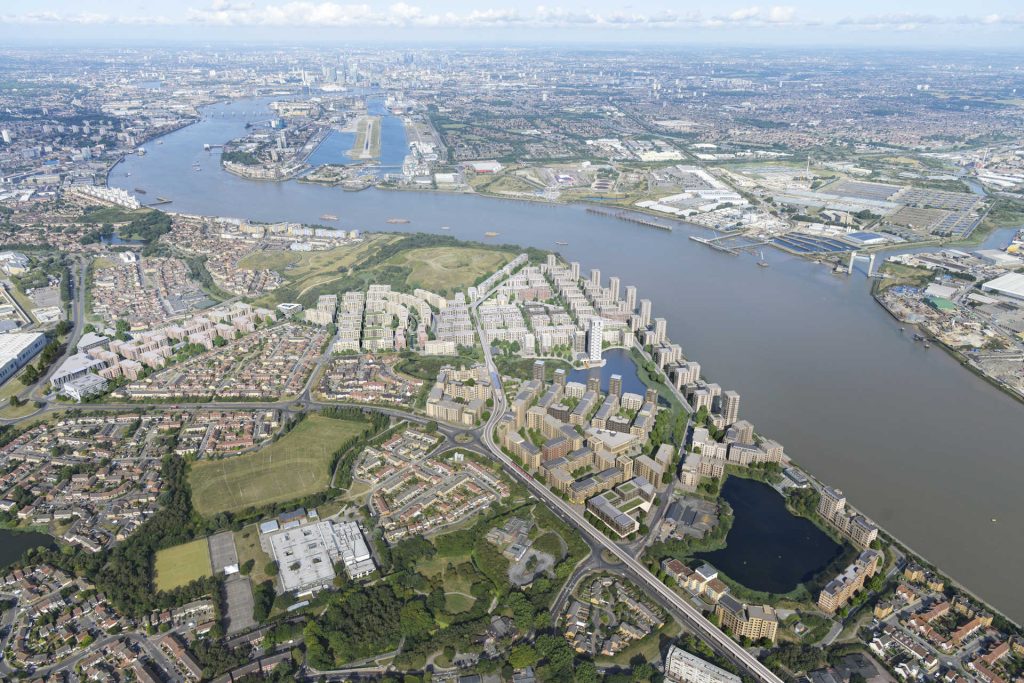
Masterplan image of Thamesmead area of London. Image: Peabody
Living in the Landscape places green and blue infrastructure at the heart of a long-term strategy. How can long-term thinking help cities respond to the climate crisis while meeting everyday social needs?
Long-term thinking is vital, particularly in landscape. If we want to make our cities more habitable in urban heat island environments, for example, planting trees is a key part of that initiative. But you can’t plant a tree overnight; it takes 15 or 20 years to create meaningful shade, which is no quick fix.
One of the wonderful things about landscape is that if you get it right, it actually improves over time. Living in the Landscape sets out an approach to investment that demonstrates benefit, and one of the critical things is that it has a natural capital account embedded in it. When we presented it to our executive team, our finance colleagues immediately understood it; for every pound invested, the health and environmental returns can be multiple times greater.
If you spend even 1% of everything we’re spending in Thamesmead over the next 30 years on landscape and public realm, you’d get unbelievable results. It’s vital that you can demonstrate this to people who hold the budgets.
Does today’s cultural and geopolitical context affect your work?
Interestingly, one of the first things I commissioned was a piece of work by Space Syntax. This looked at how people move around Thamesmead and how they occupy the place. It showed that, despite the fact people love living here because it’s so green, they don’t get out to parks much, so a lot of our work has been focused on improving that.
There are likely two reasons: first, people sometimes ask, “What’s there to do?” Second, Thamesmead is a confusing place that was built around the car. It has several massive roads and connectivity for pedestrians isn’t great. That can lead to a sense of isolation or not feeling safe, which I think is largely perceptual but a huge influence on how people think about places.
Public health and access to nature are increasingly recognised as core urban issues. What role do green spaces and biodiversity play in reducing inequality and improving life outcomes?
Some studies even suggest that an hour a day in green spaces is the equivalent of taking medication.
In Thamesmead, we’ve got a forest school site that was once a part of the former Royal Arsenal. We restored a small building and created a nature studies centre, where around 2,500 local schoolchildren visit each year. Parents and teachers love it because they can run around and do classroom activities in the woods. Some teachers have even told us it has a significant impact on some of the more challenging children’s mental health outcomes.
The Olympic Park has similar effects, particularly around the river. We don’t have specific scientific evidence but people’s reactions to places allow you to start to gather a sense of whether it’s making a difference.
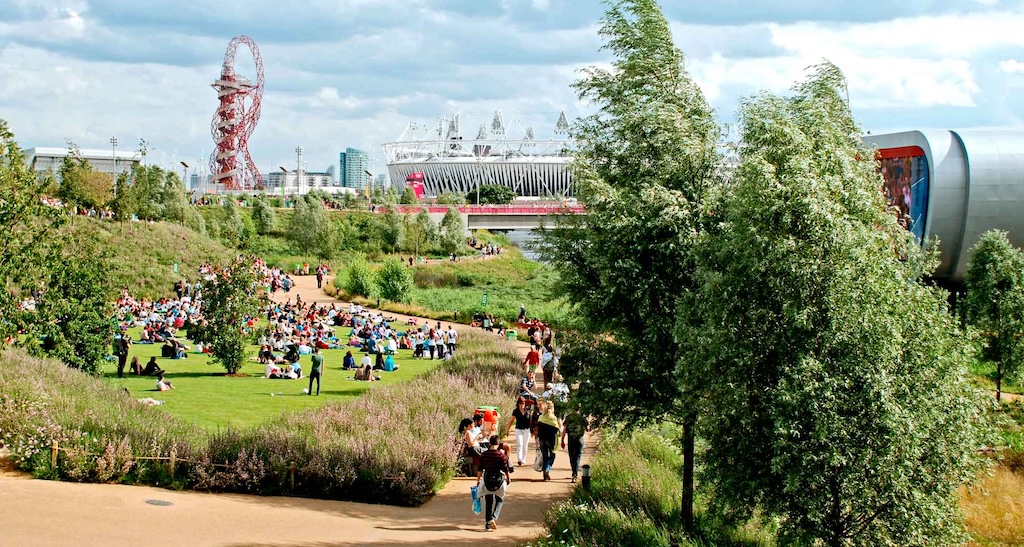
Queen Elizabeth Olympic Park. Photo: Hargreaves Jones
Peabody works closely with residents, local authorities and national government. What new models of collaboration or governance are needed if we are to deliver the UN’s Sustainable Development Goals at the pace and scale required?
Collaboration is fundamental because there’s no one person or group with all the necessary knowledge. At Peabody, for instance, we have experts in key elements of regeneration, such as landscape, culture, community development, neighbourhood management and the built environment. Our plan for Thamesmead shows local people and other key stakeholders how all these things fit together to create a successful, sustainable place.
When I put together Living in the Landscape, I worked with an expert group of critical friends who helped ensure the project was robust. Once it was ready, we launched it to a wider audience, bringing in external organisations and partners such as the Heritage Lottery Fund and the Landscape Institute. Much of the work is about communication and convening – creating something that people can understand, connect with and support.
At a local level, working with residents, we’ve done some interesting pieces of co-design. It can be hard work, but it brings real benefits because these are the places people live – not somewhere we simply parachute into for a few years. The process can sometimes feel uneasy, and that’s how it should be, because we won’t always agree. But local knowledge is phenomenally important, and underpinning this work with sustainability goals is equally essential.
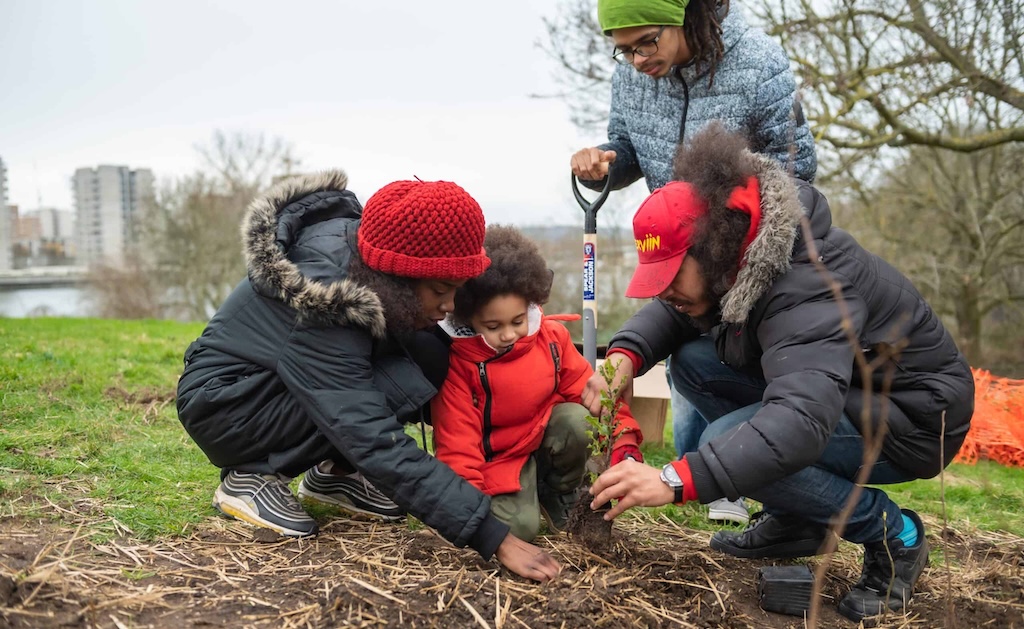
Tree planting at Southmere Park’s Tiny Forest. Photo: EarthWatch Europe
Digital innovation is often framed as a solution to urban challenges. How can technology genuinely support sustainable placemaking without becoming disconnected from community needs?
Technology can be used incredibly powerfully to provide evidence to enable greater decision-making. There are plenty of scientific papers that discuss health outcomes, for example, but technology can help to make it more visible and meaningful to those who make decisions.
At Thamesmead, we’ve got a GIS (geographic information system) that allows us to look at change management techniques, such as turning mown areas into meadows and measuring the impact. We’re also developing an urban forest strategy because many of our trees are ageing and vulnerable to pests, disease and climate change. Tools like i-Tree use a specific technique to map trees and understand them better, which we can use to develop a long-term strategy. Then we can bring in other experts to think about what sort of trees we should be planting and how we can create character and identity.
Digital technology, particularly when used in citizen science, can really help us start to tell a powerful story. And for me, it is all about telling the stories of places. If we’re investing in one of our estates, we need to demonstrate how landscapes make significant differences for a relatively low cost – opportunities for biodiversity, places where people can gather. Again, it all comes back to landscape with purpose, and telling stories is the best way to get people moving in the same direction.
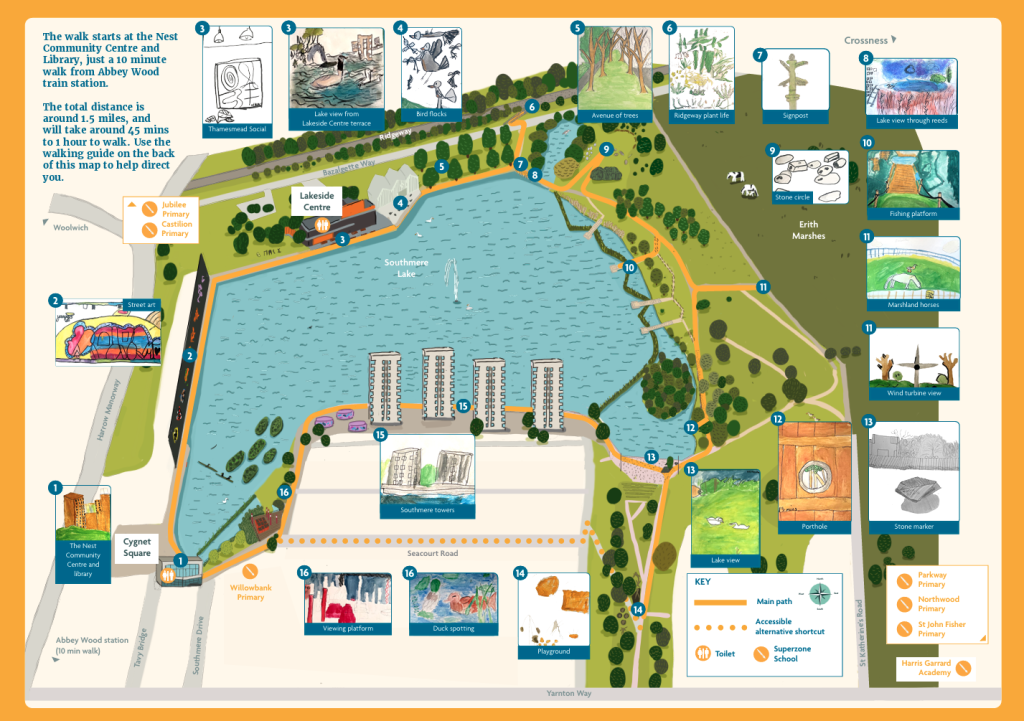
The Southmere Lake map and nature explorer guide was created from over 140 students at six local schools who went on outdoor artist workshops, managed by Bow Arts and supported by Peabody.
Looking back at projects like the Olympic Park and Thamesmead, what lessons should planners and policymakers take forward to ensure regeneration benefits existing communities as well as future ones?
Our whole-place approach to the long-term regeneration of Thamesmead has five components. We’ve split it into a series of five-year plans, and we’re into the second of these. Alongside our plan, we have clear processes and a bunch of people who know and care about what they’re doing.
You can have design codes and planning policies, but what you really need are people in the organisation with the authority, skill and experience to drive it in the right direction. For the Olympic Park, I could talk at length about the processes which drove the design and build, which were vital, but so too were the people at the Olympic Delivery Authority.
If you’re going to build a new place there is no excuse for getting it wrong. There are so many books about how to make places and design guides, but without the right people it’s less likely to happen.
I have noticed a distinct lack of laughter in public spaces. How can places better support joyful places?
We shouldn’t be afraid of creating joyful and beautiful places. We’re often too bound up with statistics and numbers, and justifying why we would be making places that support laughter is a fantastic concept.
Making places playful is really important; people laugh when they kick a ball about, when kids play, when older people can sit under a tree, have a cup of tea and laugh and reminisce. And places that support gathering – something as simple as putting benches in places where people can sit down – could support laughter.

Photo: Shaylyn
Landscape can be a key part of this because of the nature of the landscape public realm. Parks and green spaces are more democratic than buildings, which are supervised and have corridors and front doors. With landscape though, if people are given the right support to make their own places and what happens within them, that can support laughter massively.
Finally, we face a paradox. We must innovate quickly to mitigate climate change and biodiversity loss, yet meaningful community engagement and co-design takes time. How do we balance pace with participation?
One of the crucial things for me is thinking long-term. Working at pace doesn’t necessarily mean making quick, short-term makeovers. It means having a plan which could be quite high level, like Living in the Landscape. It means telling the story of that so people start to get their head around what it’s about.
The importance of time and landscape is really critical because you need to decide where to start. I often use the phrase ‘running and walking at the same time’. By that, I mean doing the things you can achieve quickly and at pace. For example, planting some trees and seeing what happens – if people respond well to them, or if they simply aren’t interested. At the same time, there’s the work that takes longer. This might involve working with schools, having conversations and building capacity, which takes time as you need to engage people in something they might never have thought about before. You’ve got to find a way to do these things simultaneously.
At the same time, you’ve got to do things that start to build confidence in who you are as an organisation. When Peabody first came to Thamesmead, we were looked upon with suspicion – partly because no one knew who we were, and partly because there had been decades of promises that never came to anything. Very few community groups existed because they hadn’t been encouraged or nurtured in the past. We’ve helped to change all that.
It takes time to invest in people and tell a story, but it’s so important. We’re undeniably in a pickle as humanity, but we’re also capable of making an enormous difference. Engaging people in their landscape is probably the only way to engage them in the broader story of biodiversity and sustainability.
Thank you Phil for sharing your insight, experience and impactful work.
Contact us at hello@calvium.com and +44 (0) 117 226 2000 to deliver sustainable, care-filled and impacting digital innovation.
Subscribe to the monthly Calvium newsletter to get more insight and inspiration like this in your inbox.
More from our Expert Interview series
Hear from other expert practitioners, bringing their lived experience into delivering positive innovation:
- Andrew Lansley, global sustainability and accessibility innovation specialist
- Andrew Morris, Executive Director, British Society of Soil Science
- Ben Hawes, Technology Consultant, Researcher and Associate Director, Connected Places Catapult
- Ceren Clulow, Programme Director, Connecting Cambridgeshire
- Christine Hemphill, Founder, Open Inclusion
- Daisy Narayanan MBE, Public Realm Director, The Crown Estate
- Dan Cook, Assessor, Cambridge Institute for Sustainability Leadership
- Prof Daniel Armanios, BT Professor of Major Programme Management, Saïd Business School, University of Oxford
- Joel Mills, Senior Director, Architects Foundation Communities by Design
- John Worsfold, Head of Solutions Innovation, RNIB
- Ludo Pittie, Head of Landscape, WSP
- Marc Cairns, Managing Director, New Practice
- Mark Hallett, Regeneration Associate, The Good Economy
- Paul Wilson, senior advisor and consultant on smart cities
- Prof Peter Madden, Professor of Practice in Future Cities, Cardiff University
- Steve Sayers, Chief Executive, Windmill Hill City Farm
- Warren Smith, Director of Insight, Innovation and Impact, Posterity Global
- Will Weston, Accessibility and Inclusivity Consultant, All Ways Access