For the past year, we’ve published a fortnightly round-up of accessibility news as part of Calvium’s commitment to creating better experiences for all, through inclusive technology.
With a 12-month slate of news and innovation from around the world – from travel and mobility to global policy and legislation – it felt like an opportune moment to reflect on what trends have emerged, where progress has been made, and what things may look like for the year ahead.
Travel and mobility
Undoubtedly the strongest theme, transport accessibility is a tale of two halves. Rail travel, in particular, has been a cause for contention, repeatedly described as failing disabled users. In 2026, there is an “accessibility crisis” in the EU.
There have, however, been some improvements in technology and infrastructure, for example the creation of 3D maps as a wayfinding tool and fault-reporting technology in London Underground lifts.
Similarly, the aviation industry is beginning to respond to accessibility challenges. Airbus has been making a concerted push for greater accessibility and Luton Airport introduced new initiatives, such as a ‘wish list’ for disabled passengers and self-propelled wheelchairs.
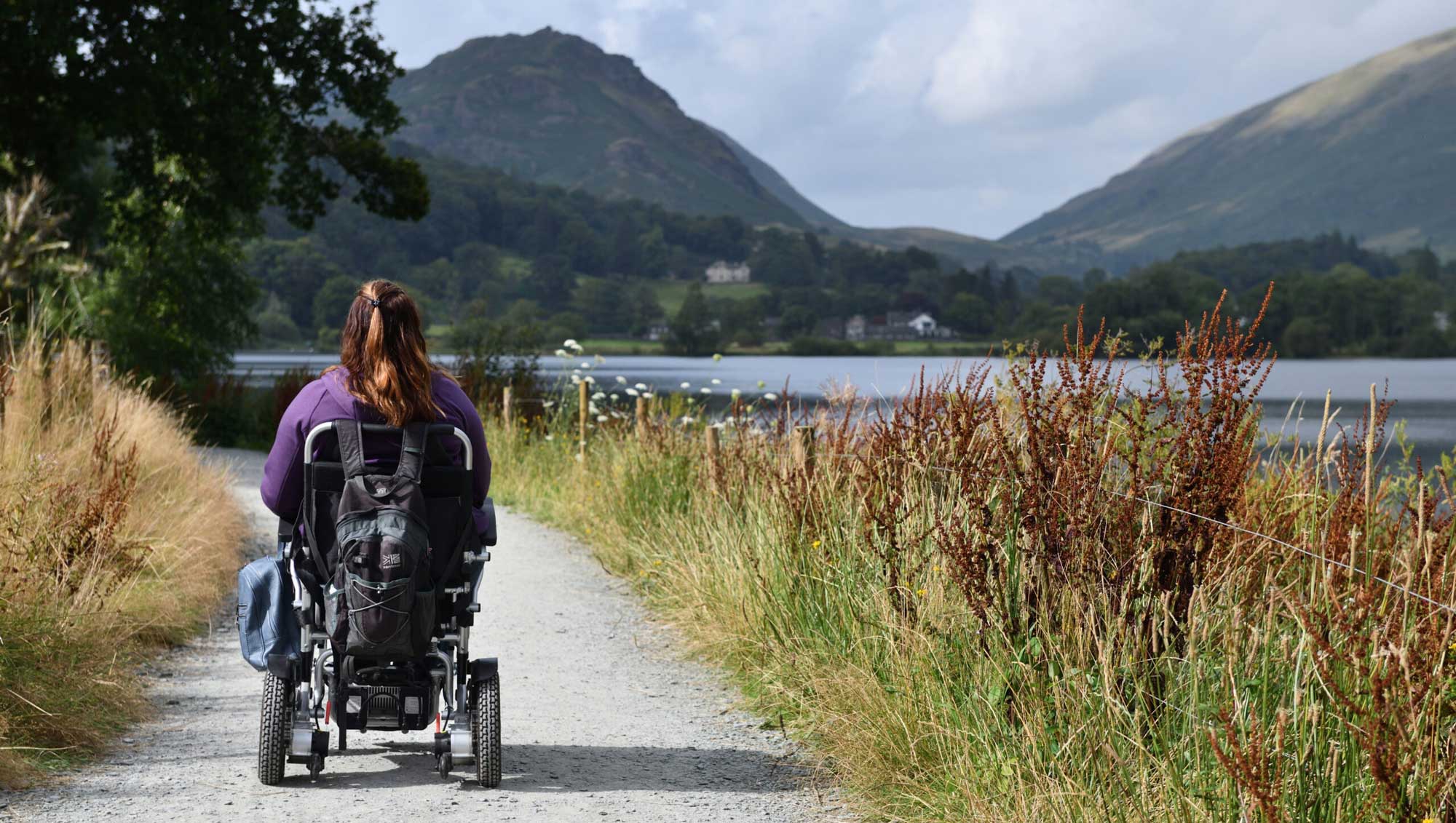
On the ground, in the West robots are mapping pavement accessibility in the US and new accessible routes are helping wheelchair users to explore the Lake District in the UK, while on the other side, Mumbai held an ‘accessibility walk’ to raise awareness of inadequate pedestrian infrastructures.
Elsewhere, ABTA (Association of British Travel Agents) rolled out new guidance on accessibility and inclusive travel to support planning, booking and other hurdles, and Richmond Council unveiled a new strategy focused on improving connectivity and mobility.
Despite many ongoing issues, travel and mobility is a clear current priority and well-poised for further innovation.

Digital accessibility
2025 felt like somewhat of a stepchange for digital accessibility and inclusion, with improvements in mainstream and cutting-edge technology, and the emergence of AI-powered tools and data-driven design.
From AI incredibly recreating the voice of a woman with motor neurone disease, to tongue-controlled technology, digital accessibility innovation over the past 12 months has been profound. At the same time, Big Tech companies like Apple and Spotify are continuing to update accessibility features to improve usability – for example, Spotify introduced ‘reduce animations’ settings and Apple rolled out ‘accessibility nutrition labels’.
Countries in the Global South are making good progress too, with a number of digital inclusion initiatives seeking to transform the lives of women, girls and young people in the likes of Chile and Nigeria.
By contrast, the financial services and education sectors are seemingly lagging behind; reports highlighted various areas for improvement, including better accessibility in professional exams.

Tongue controlled technology: Augmental’s MouthPad^
Culture, events and sport
The past 12 months have shown that accessibility in the arts and entertainment sector is no longer just an afterthought; it is becoming a key part of the audience experience design. In 2025, the Royal Ballet used immersive descriptive audio to explore how blindness can change responses to storytelling, and Edinburgh Fringe made shows more accessible for audiences who are blind or have low vision.
Meanwhile in Delhi, the High Court made moves to ensure films are more accessible to disabled people, and a New York teenager began campaigning to make subtitles mandatory in local cinemas. China simultaneously outlined plans to improve museum accessibility and cultural participation.
The sports industry is making noticeable strides, too – from the Lawn Tennis Association making events more accessible for those with non-visible disabilities, to Milano Cortina – the host city of the 2026 Olympics and Paralympics – launching an accessibility and inclusion strategy for the Games. As part of this, it has introduced a new ticketing process, which for the first time in Olympic history will provide the option to select facilities such as quiet spaces, or noise-cancelling headphones.
Similar innovation is happening in the UK with All In, which is seeking to improve access to culture and creativity in the UK and Ireland. All of this points to there being a growing international consensus that everyone should have equal access to arts, sport and entertainment.
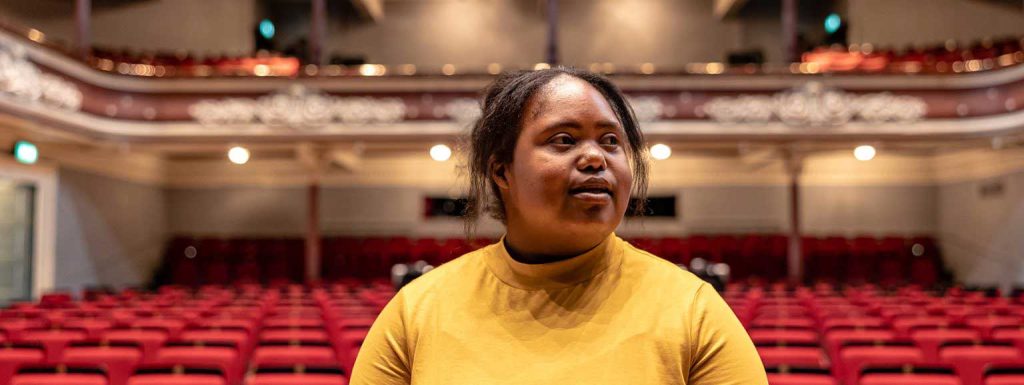
Photo: Karol Wyszynski
A global priority
The stories we uncovered over the year clearly demonstrate that accessibility initiatives are growing in priority globally. Governments the world over are stepping in and considering policy and legislation more seriously.
While there were calls for reform in UK law and parliamentary accessibility, the EU rolled out its European Accessibility Act, South Australia launched a landmark disability inclusion plan and Wales launched a new digital inclusion guide.
At the same time, we saw data-driven design in Africa, building codes revised in Singapore, and the South Korean government invested over 9bn won (£4.6bn) to improve the accessibility of self-service kiosks as part of wider laws to improve convenience for digitally vulnerable populations.
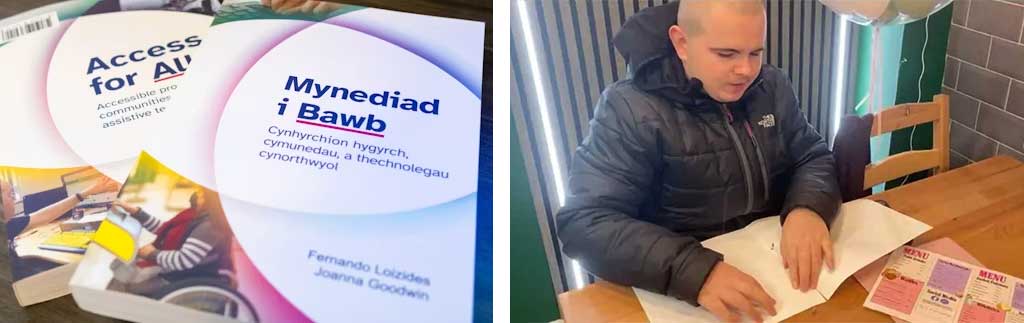
New digital inclusion guide for Wales, and Tobias Finnie reading his Braille cafe menu at Mad About The Buns.
Local advocacy
Change is also happening at a local level. People are taking accessibility into their own hands and challenging the status quo from the ground up.
On the Transpennine Express, one worker has been bringing his therapy dog along to work to support vulnerable passengers, while a man who has been blind since birth developed menus written in Braille for his sister’s cafe.
While one Cardiff graduate won an award for his campaigning to improve the accessibility of music venues for disabled artists and performers, another man won investment for his mobile app Snowball – described as the ‘Trip Advisor’ for the disabled community.
Communities are playing an equally fundamental role, increasingly shaping the accessibility of their local areas through community engagement and co-design. For example, this San Diego children’s park is being redesigned to be more inclusive 30 years since it opened.
There is much to feel inspired by, and these stories really show the power of individual acts and community action.

San Diego’s Children’s Park. Photo by Schmidt Design Group, Devon Boutte
In summary…
Progress is being made in many corners of society and business, but it also highlights where the gaps still are: digital exclusion, inconsistent implementation, everyday physical and digital barriers. However, increased awareness is leading to action, and innovation is occurring from both the ground up and top down.
We will continue to play our part in helping to build a more inclusive world for all.
Subscribe to the monthly Calvium newsletter to get more insight and inspiration like this in your inbox.